Categories
Accommodations
Activities
Food
Experiences
Travel Tips
Tours
Destinations
Posted By
Noureddine Ingrioui
Lead Tour Guide
Posted on
If you've been invited to a Moroccan wedding, or you're planning a first trip and want to understand what you might see, the first thing to know is simple. Moroccan wedding customs are not built around a single ceremony. They unfold as a sequence of legal, family, and social moments, and the order matters.
That is why visitors can feel a little lost at first. One family may treat the contract, henna night, and reception as separate occasions. Another may compress the celebration into a shorter schedule because of city life, work, or budget. The structure stays recognizable, but the timing is flexible, and that flexibility is part of the tradition.
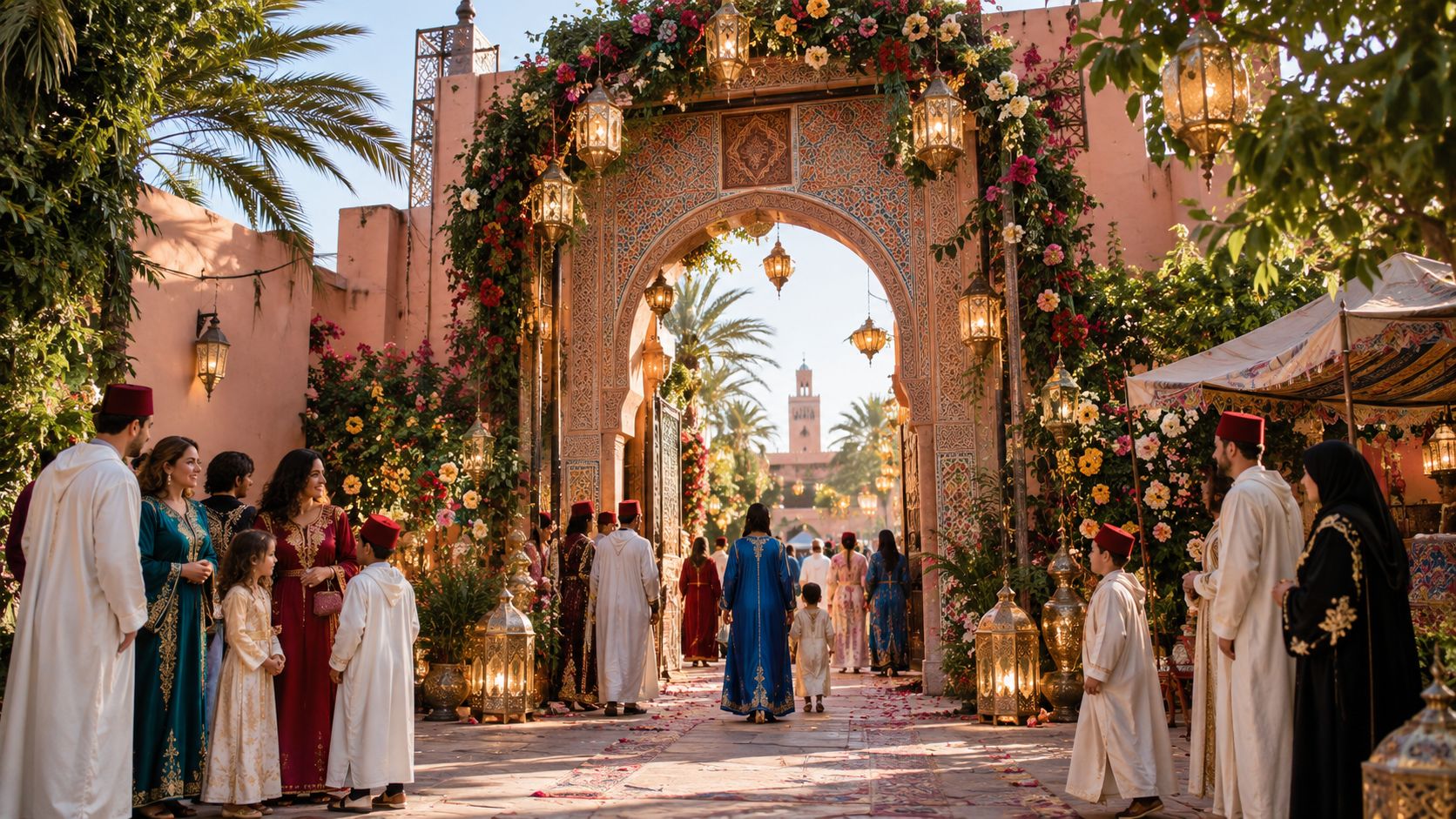
Table of Contents
An Introduction to Moroccan Wedding Celebrations
If you arrive expecting a single evening party, Moroccan weddings can seem unusual at first. In practice, Moroccan wedding customs are a sequence of family and social rituals that may stretch over several days, and older forms were often much longer. Modern weddings are usually shorter in the city and still more extended in rural settings, but the order of events remains familiar. That practical shift reflects changes in daily life without removing the tradition's structure (source).
What stays the same
The core moments are usually the hammam, the henna night, and the final feast. Older wedding practice also linked celebrations to the autumn after harvest, when families had more food on hand and could host larger gatherings. That detail helps explain why Moroccan weddings still carry a strong sense of abundance, hospitality, and family standing.
What visitors see is a public family event, not just a private party. Different generations help with dressing, food, music, setup, and receiving guests, so the whole household is visible in the process. The rhythm can feel less like a formal performance and more like a managed series of duties, greetings, and celebration.
For travelers, the main lesson is simple. Time is flexible, but the social order is not. Guests arrive when the family is ready, people greet one another at length, and the wedding follows family timing rather than a rigid clock.
For a broader historical background on how Moroccan customs formed over time, see our internal guide on Moroccan history. That history helps explain why wedding rituals still reflect honor, fertility, and family alliance.
The Legal Marriage and the Public Celebration
The part that confuses most visitors is the split between the legal marriage and the celebration. In Morocco, the marriage contract is signed before two adouls, or notaries, while the public festivities can continue for several days and remain socially separate from that legal act. In practical terms, the paperwork and the party do not have to happen on the same day.
Why the split matters
This separation lets families handle the legal side and the event side on different schedules. A couple may already be married before the henna night, the hammam, or the reception begins. That is why travelers sometimes hear family members speak about a wedding as “done” long before the public celebration is finished. The wedding party is often a confirmation of the union, not the legal moment itself.
There's also a planning benefit to this structure. When the contract is already settled, families can focus on guest lists, venue arrangements, food, music, and travel without legal paperwork driving the schedule. That lowers pressure on the event itself. It also explains why the same wedding can feel relaxed in one family and highly staged in another. The contract is fixed. The social format is flexible.
What visitors should understand
If you're attending as a guest, don't assume that the main party is the legal ceremony. It usually isn't. The celebration is an expression of family status, hospitality, and continuity. In many cases, that is the part guests remember most, because it is where the costumes, music, and group rituals become visible.
For travelers planning their own timing, a careful timeline helps. Good preparation makes a wedding event easier to follow, and the same logic applies to trip planning. A resource like stress-free bridal planning is useful because it shows how clearly staged events reduce confusion for everyone involved. The same principle applies here, even if the cultural details are different.
The Traditional Wedding Timeline
A Moroccan wedding is usually spread across several moments, not compressed into one day. Visitors often see the henna evening first, then the main celebration, then a family gathering after the public event. In some rural or Amazigh settings, the sequence can stretch longer, but the practical point is the same. Families pace the rituals so each stage has room to happen properly, as noted in source.
A simple sequence to watch for
| Day/Event | Primary Focus | Typical Participants |
|---|---|---|
| Pre-wedding preparations | Bathing, grooming, family coordination | Bride, female relatives, attendants |
| Henna night | Blessing, decoration, group participation | Bride, women's side, henna artist |
| Main wedding night | Entrance, feast, music, public celebration | Both families, invited guests |
| Post-wedding gathering | Family visits and closing hospitality | Close relatives, household guests |
The bride may change outfits several times, but many families now use three or four rather than the fuller set linked to older custom (source). That matters on the ground because clothing changes affect timing, transport, and how long guests wait between key moments. The well-known idea of seven outfits belongs to tradition, but it is not a fixed rule.
What this means on the ground
Travelers often make the same mistake. They treat the wedding as one continuous party and miss the way the day is divided into stages. The schedule moves through preparation, blessing, public entry, and closing visits, and each phase has a different pace.
A family can spend a long time on grooming, dressing, and arranging the room before anyone sees the bride. Later, the public celebration may feel fast and crowded by comparison. That rhythm is normal. It helps explain why one wedding can look calm while another feels highly staged, even when both follow the same basic customs.
For guests, the useful question is not just what happens, but when it happens. A clear sequence tells you when to expect a more intimate setting, when the event becomes public, and when the family circle tightens again. That same planning logic is useful in stress-free bridal planning, which shows why staged preparation reduces confusion. In Moroccan weddings, the sequence serves the same purpose even though the cultural details are different.
Typical order at a glance
- Preparation. Bathing, dressing, and family setup.
- Henna night. Decoration and blessing.
- Wedding night. Public entry, music, and feast.
- Family gathering. Closing visits and continued hospitality.
Key Ceremonies and Their Meanings
The most visible rituals are also the ones guests remember longest. They are not random traditions. Each one signals purity, protection, welcome, or status in a language the family and community understand immediately.
The hammam and the henna night
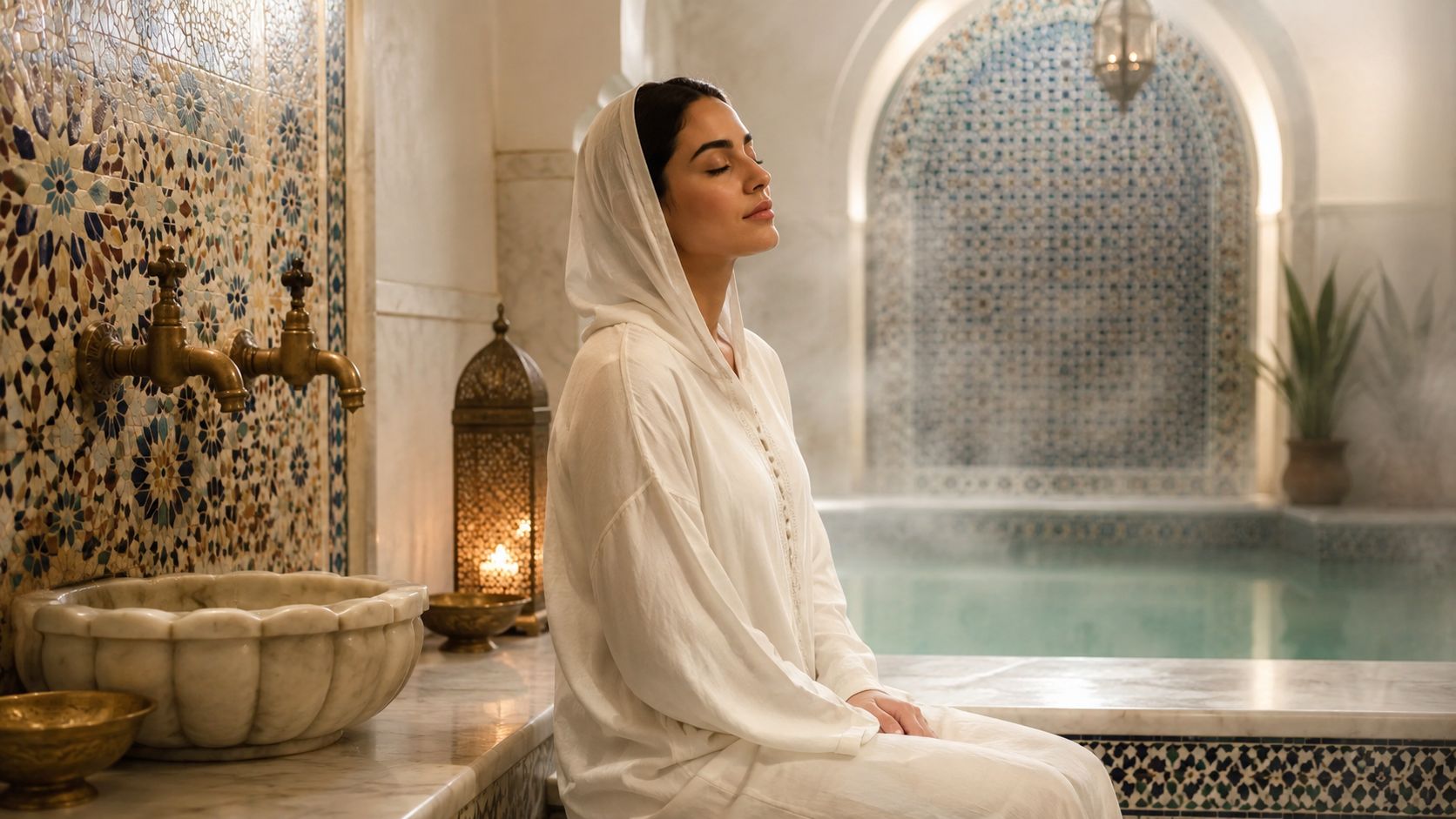
The bride typically begins with a ceremonial hammam bath, then moves into henna night, where a trained henna artist, often called a hennaya, draws intricate patterns on the hands and feet (source). Those motifs are commonly read as symbols of luck, fertility, and protection. Guests usually receive simpler designs, which creates a visible difference between the bride's role and everyone else's.
That hierarchy is important. The bride's henna is not just decoration. It marks her as the central figure of the rite. The preparation also needs time, because body care, dressing, and the setting of henna all have to be managed before the main event begins. For visitors, this is one reason Moroccan weddings often include women-only spaces and long preparation periods before the public celebration starts.
For a more detailed look at the bathing ritual itself, our guide to the hammam experience in Morocco explains the setting and etiquette travelers should understand.
The bride's entrance and the public face of the wedding
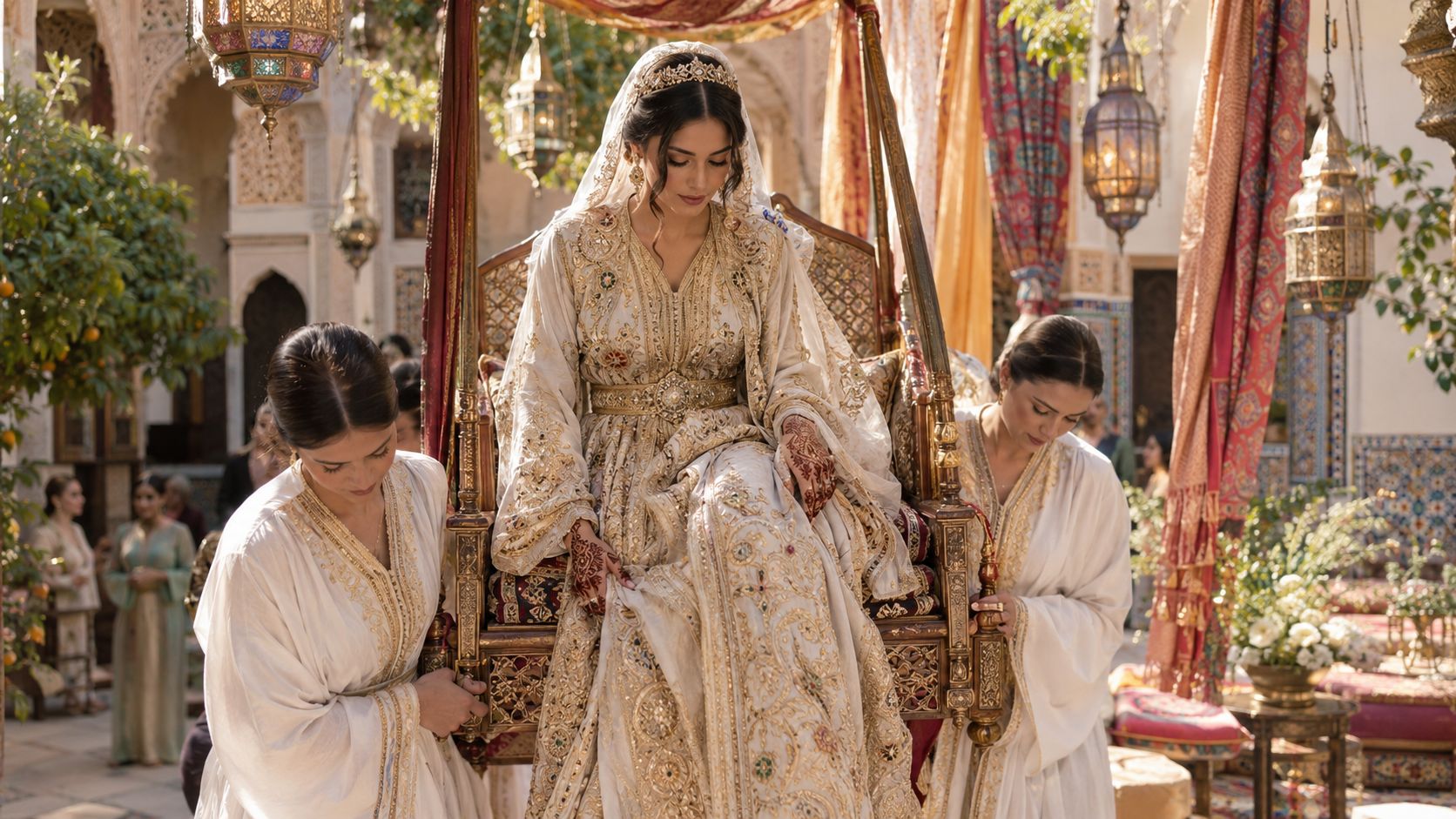
After the private rites, the wedding becomes public. The bride and groom may make a grand entrance, sometimes carried on an Amaria, an ornate chair that makes the couple the visual center of the room. This is the moment when family pride becomes visible. Music, costume changes, and the movement of guests all build around that entrance.
The public celebration is where Moroccan wedding customs shift from preparation to display.
For guests, the lesson is simple. The ceremony is not only about joining two people. It is about presenting a union to the family, and by extension to the community. That is why the symbolic order matters so much. If you understand the hammam, the henna, and the entrance, you can read the rest of the event with much more confidence.
A Practical Guide for Wedding Guests
A Moroccan wedding can feel easy to enjoy if you read the room and respect the family rhythm. Start with the basics. Dress neatly and modestly, but keep it festive. Men usually fit in best with smart, conservative clothing. Women should choose covered, elegant outfits that suit a family gathering. Bright colors usually work well, while clothing that looks too casual can feel out of place.
Gifts, timing, and guest behavior
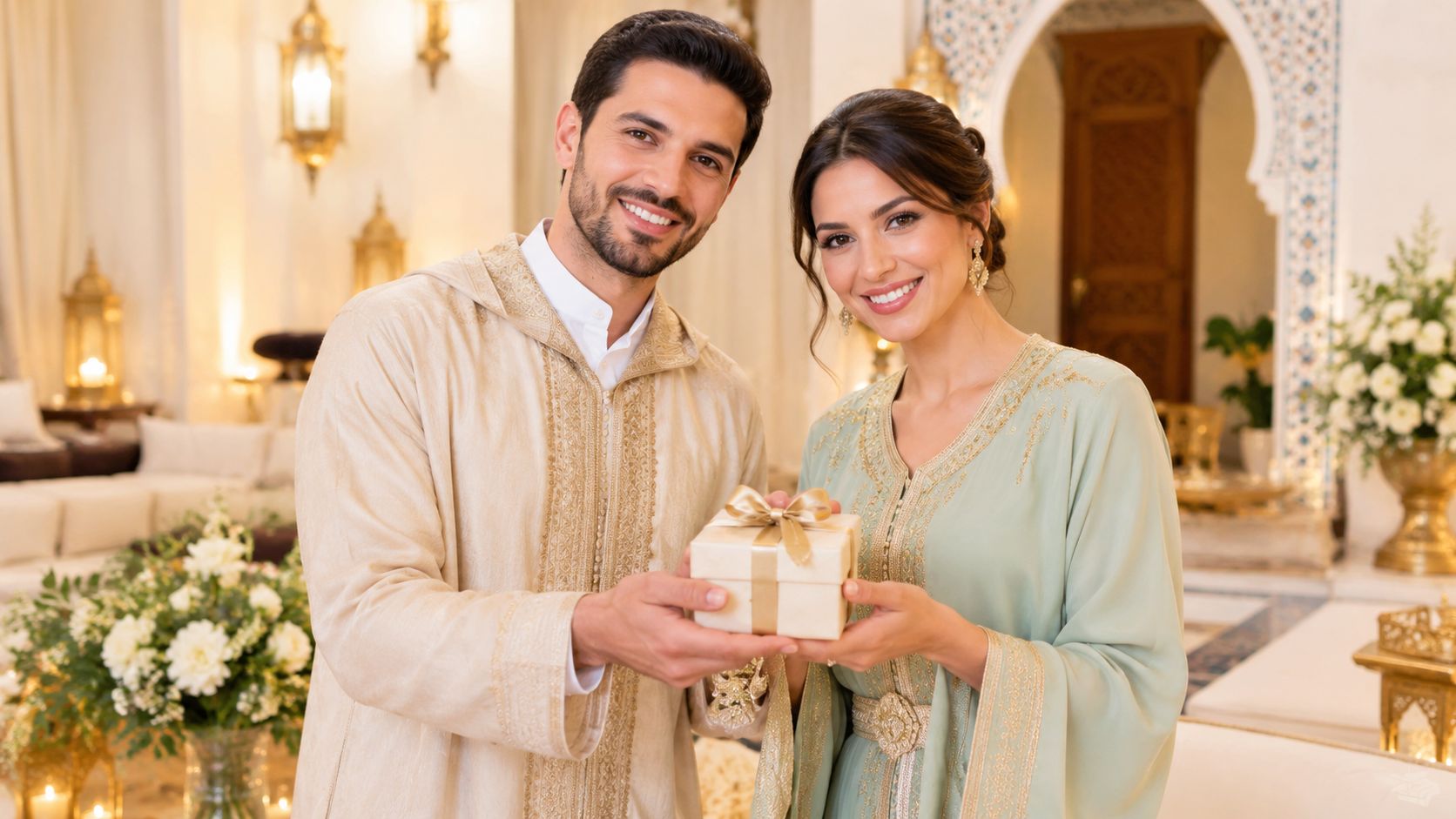
Gifts are usually practical rather than flashy. Cash is common, and household items can also be appropriate if you know the family well. If you are unsure how to handle money during a trip, our guide to what currency can I use in Morocco helps travelers avoid awkward assumptions.
Timing takes patience. The wedding is often spread across several gatherings, so guests may move from a private family night to a larger public celebration, then to another visit or meal later on. That is why the pace can feel slower than a typical reception, with more waiting, more movement, and more time built around family roles.
What to do and what to avoid
- Arrive prepared for waiting. Family logistics often shape the flow more than the printed schedule.
- Dress with care. Keep it respectful, especially during the earlier family-focused parts.
- Bring a gift only if invited in a context where gifts are expected. Ask a host if you are unsure.
- Follow the lead of local guests. The social rhythm is the best guide to where you should stand, sit, or join in.
- Stay flexible with timing. The celebration often starts late and moves according to family activity, not fixed clock time.
For travelers who want to keep wedding memories in one place, simple guest photo upload solutions can help organize images without making guests work harder. That matters when many people are taking photos across different moments and rooms.
If you are invited to a wedding while visiting Morocco, keep your approach calm and respectful. Let the family set the pace, stay attentive to the room, and follow local cues. You will be a better guest, and you will see the customs in a more grounded way.
Experience Moroccan Culture with Us
A Moroccan wedding is one of the clearest windows into local life. It shows how family, hospitality, religious formality, and celebration fit together in a way that is both social and intimate. For travelers, that matters because it explains why a wedding is never only about the couple. It is also about the people around them, the household that hosts them, and the community that witnesses the union.
The practical value of understanding these customs is simple. You move through Morocco with less guesswork. You know why the legal contract may come before the public party. You know why a henna night needs preparation time. You know why the event may feel slower, fuller, and more layered than a one-night reception. That understanding makes every family invitation, cultural visit, or special celebration feel more grounded.
We work with travelers who want that kind of context on the ground, especially on private itineraries through Marrakech, the Atlas Mountains, the desert, and the imperial cities. We build trips for couples, families, and small private groups who want Morocco explained properly, not rushed past. We also help guests plan respectful cultural experiences around hammam visits, medina time, and special occasions like honeymoons.
If you want a private Morocco trip built around real cultural understanding, we can help you plan it. Visit Moroccan Guides Travel to request a free custom itinerary, and we'll shape a trip that fits your dates, pace, and interests.
Thanks for reading
For over 20 years, we've been guiding travelers across Morocco from the peaks of the Atlas Mountains to the depths of the Sahara. To explore Morocco your own way and support our work, check out our private tours and Tailor Made Morocco Tours.
Contact Us
GET IN TOUCH
Ready to take the next step? Whether you’re ready to book or just exploring possibilities, we’re here to help. Share a few details with us, and our team will reach out