Must See Marrakech: Top 10 Sights and Experiences
Categories
Destinations
Posted By
Noureddine Ingrioui
Lead Tour Guide
Posted on
Marrakech isn't a small heritage town built only for sightseeing. Its prefecture grew from 861,205 people in 1994 to 1,571,580 in the 2024 census, an increase of about 82.5% over that period, according to Marrakech population data. Tourism is operating at similarly high levels. The city recorded 5.0 million overnight stays and 71% hotel occupancy in the first half of 2025, compared with 68% in the same period of 2024, as reported by ATTA Travel's Marrakech tourism update.
That changes how we plan a first visit. The strongest must see Marrakech itinerary combines medina landmarks, decorative architecture, gardens, and one experience beyond the city. The ten choices below are organized by the kind of day they create. For each one, we explain the best timing, likely drawbacks, crowd levels, access limits, and when a private guide or excursion improves the experience.
Moroccan Guides Travel is an owner-operated private tour company based in Marrakech. We use licensed local guides, professional drivers, and custom itineraries. We never run group tours. Depending on your pace, we can combine city visits with the Atlas Mountains, Agafay, or Essaouira, then connect Marrakech with the Sahara, imperial cities, or the Atlantic coast.
Table of Contents
1. Jemaa el-Fnaa Square
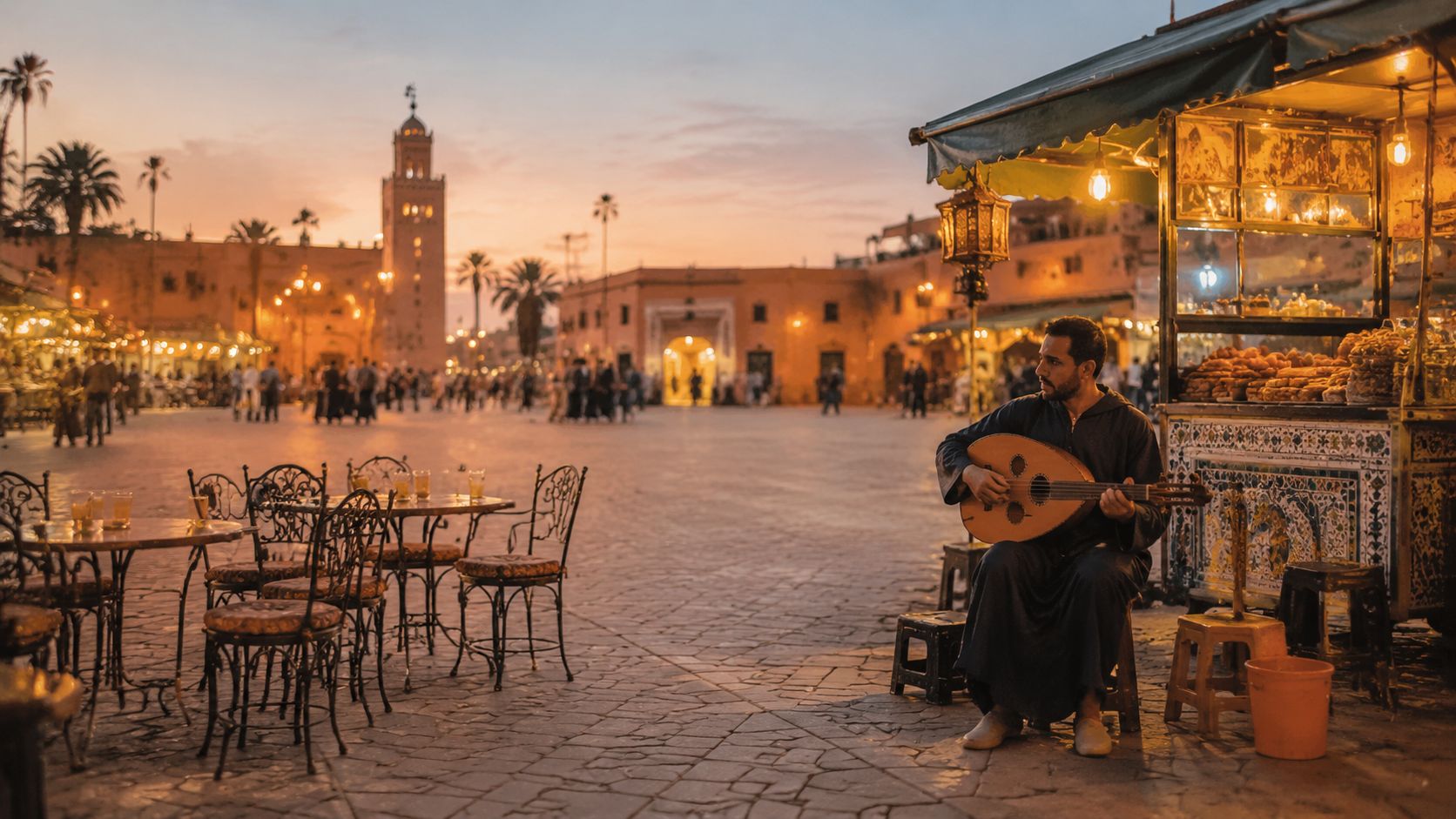
Jemaa el-Fnaa is the clearest introduction to Marrakech's social life. The central plaza links the medina with the souks and major mosques. Street performers, food vendors, and craftspeople use the square as a daily meeting place, so it works less like a static monument and more like a public stage and commercial crossroads.
The trade-off is intensity. Late afternoon and evening bring the strongest activity, but they also bring more vendor pressure, crowded paths, and greater petty-crime risk. Travel advisory guidance for Morocco highlights the need to watch belongings in heavily trafficked places such as Jemaa el-Fnaa, particularly later in the day.
We use the square early in a city program because it gives first-time visitors a practical map of the medina. A guide can explain how the stalls operate, point out the souk entrances, and help you judge food stalls and informal offers without turning the visit into a rushed transaction.
Practical rule: Agree on the price before ordering food, sitting at an outdoor café, or accepting a performance. Carry small cash denominations and keep phones, wallets, and passports secure.
Visit early morning if you want space to orient yourself. Choose late afternoon if you want the square at peak energy. Afterward, explore the souks with a clear exit point rather than wandering without a plan. That approach works better for families and travelers who prefer control over spontaneity.
2. Bahia Palace
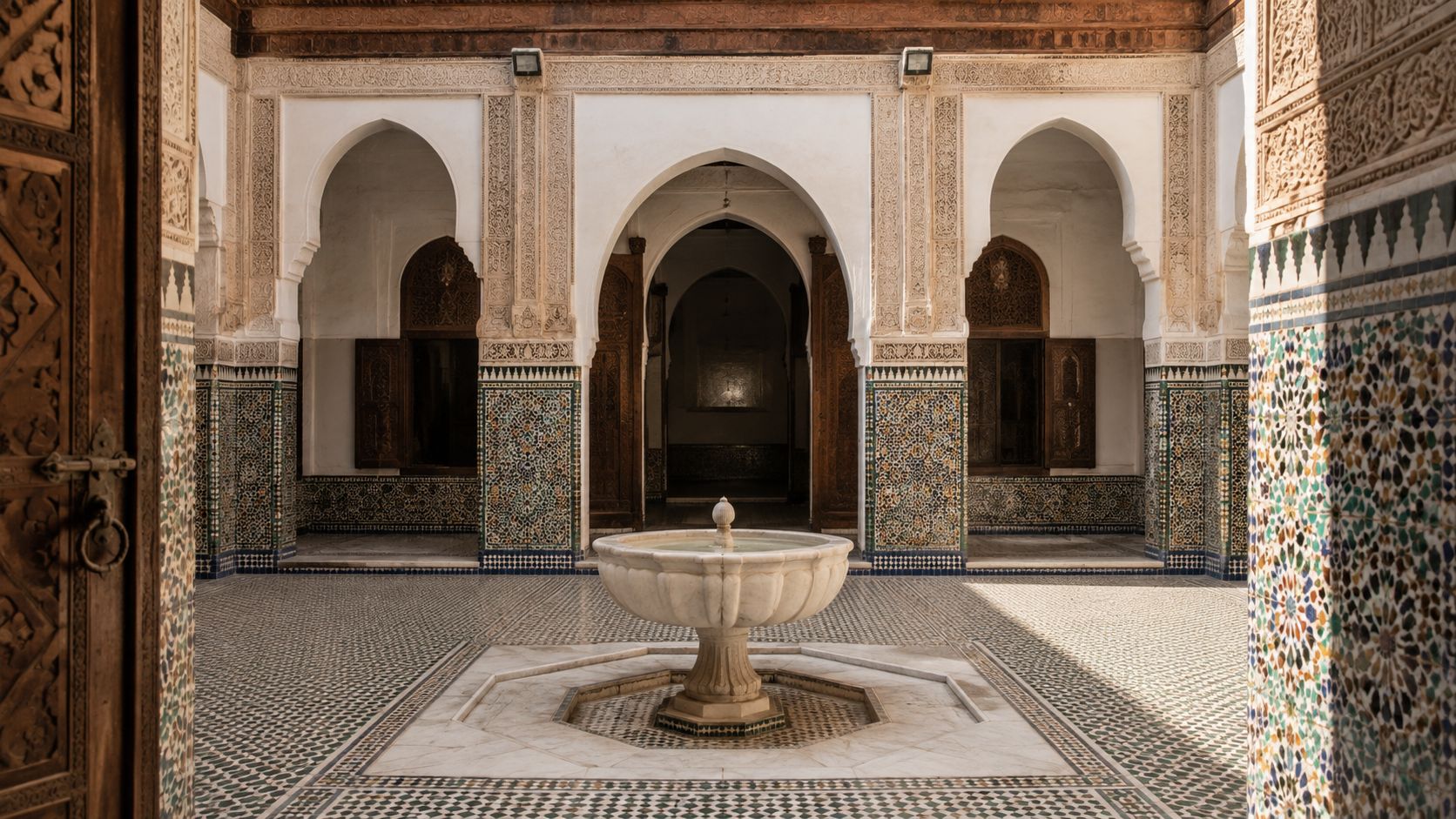
Bahia Palace shows Moroccan architecture at domestic scale. The nineteenth-century palace contains courtyards, decorated rooms, zellige tilework, carved cedar, and painted plaster. Its value comes from the relationship between rooms and courtyards, not from a single grand exterior.
We use Bahia Palace to explain how wealthy households organized space by function, status, and family hierarchy. Without that context, visitors often see attractive tiles and arches but miss why certain rooms sit where they do, how courtyards control light and air, and how craftsmanship communicates wealth.
The palace is open to the public and accessible on foot from Jemaa el-Fnaa. That makes it easy to combine with the square and the southern souks. It also means the site can become crowded during the middle of the day, especially when several city groups arrive at once.
Give the details time to register
Allow one to one and a half hours for a complete visit. This planning figure comes from the practical site guidance for the palace, not a fixed official access rule. Visit in the morning when possible, wear shoes with a firm grip for uneven courtyard surfaces, and carry water for the walk between sites.
A self-guided visit works if you mainly want photographs. A licensed guide adds the historical structure that turns the palace into a readable building. Under Morocco's tourism law, tourist guiding requires official authorization, with eligibility tied to nationality, age, physical fitness, training, and other legal conditions, as set out in Morocco's tourism guide legislation.
3. Koutoubia Mosque and Garden
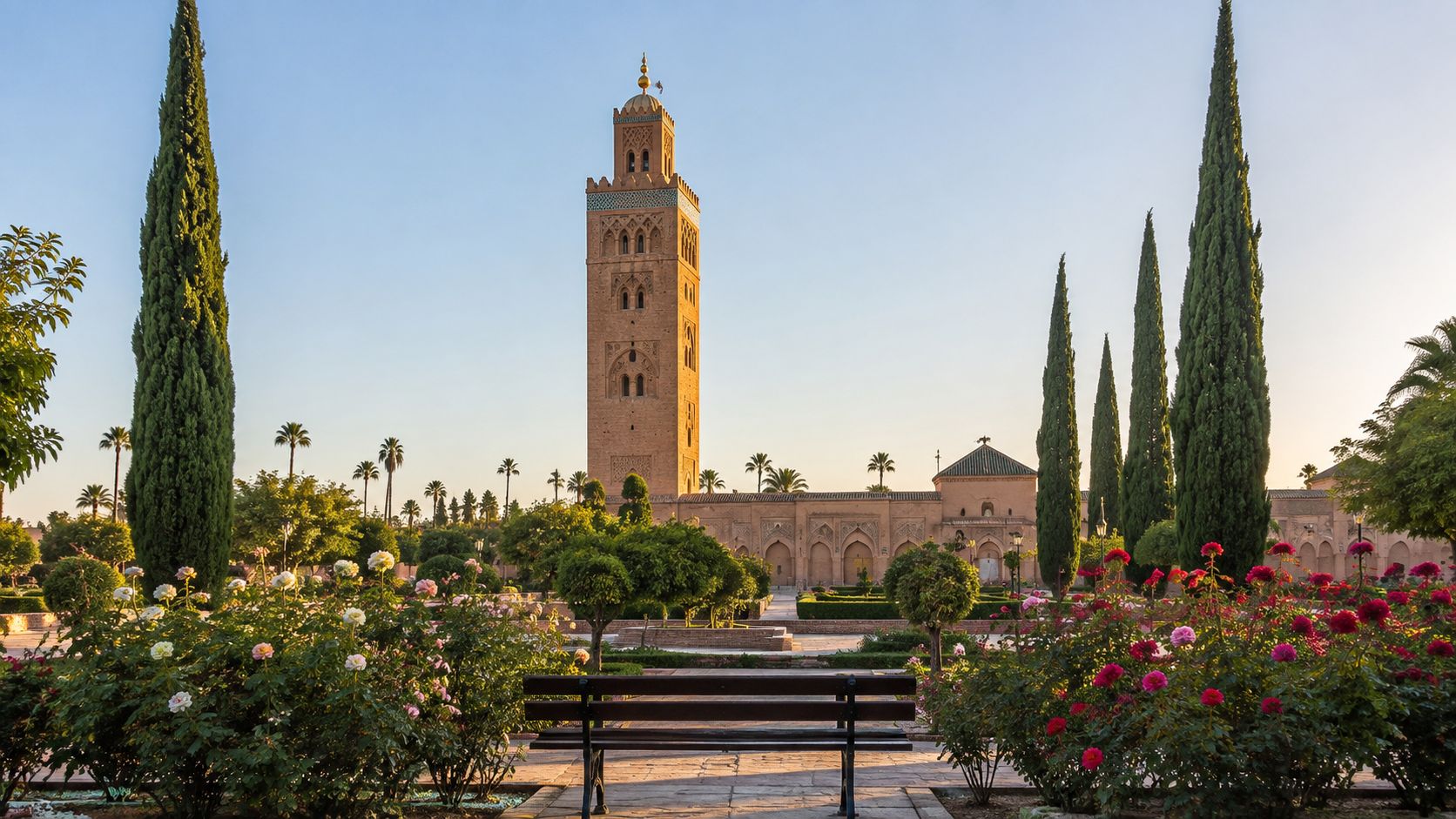
Koutoubia Mosque is Marrakech's main visual reference point. The twelfth-century mosque stands at the southwestern edge of the medina, and its minaret remains visible from many streets. Non-Muslim visitors can't enter the mosque, so the correct experience is an exterior walk, architectural explanation, and pause in the surrounding garden.
The garden creates a useful contrast with the medina. Roses, cypress trees, and seating areas give you room to slow down and understand the city's layout. From the south side, the garden provides one of the clearest views of the minaret.
We often use Koutoubia as a reset point between denser visits. It helps travelers understand where the medina ends, where the modern streets begin, and how major gates connect the historic core with the wider city. Combining it with a walk through Bab Agnaou adds a clear sense of the medina's southern edge.
Choose the right light
Early morning and late afternoon usually offer more comfortable conditions and better exterior light. Shade is limited, so bring water even if you're visiting for a short walk. Menara and the Atlas views can be useful later in the day, but Koutoubia works well before the square becomes busy.
Dress respectfully around the mosque. The exterior is public space, but it remains an active religious setting. Photography is welcome from appropriate public areas, yet visitors should avoid blocking paths or photographing people without permission.
Koutoubia is best treated as an orientation landmark, not a box to tick. Spend enough time to understand its position in Marrakech before moving deeper into the medina.
4. Saadian Tombs
The Saadian Tombs provide one of Marrakech's most focused historical visits. Built in the sixteenth century, they honor the Saadian dynasty, a royal family linked to Morocco's resistance to European invaders. The modest entrance leads to chambers and a central courtyard filled with detailed zellige, carved stucco, and funerary architecture.
This is a close-observation site. The decorated chambers differ in tile patterns, carved surfaces, and layout, and those details are easy to miss without context. A private guide can connect the tombs to the dynasty and the wider history of Marrakech. Without that explanation, the visit may feel brief and separate from the rest of the medina.
Pair history with a nearby walk
The tombs stand south of Koutoubia, near the Qasr el-Bahar area. We usually combine them with Koutoubia, Bab Agnaou, or another southern-medina walk instead of crossing town for one short stop. Allow 30 to 45 minutes for the full visit as a practical planning estimate.
Early or late visits usually mean less heat and lighter crowds. The interior chambers can feel cool, so a light layer is useful. Wear comfortable shoes for uneven approaches and surrounding streets.
Check access conditions before leaving. Restoration work may affect entry, and opening arrangements can change. We confirm those details before fixing the tombs into an itinerary, rather than relying on an old schedule.
A history-focused morning works well here. Start at Koutoubia, walk toward the southern gates, visit the tombs with a guide, then continue to Bahia Palace. The route keeps the day geographically coherent and limits backtracking.
5. Majorelle Garden
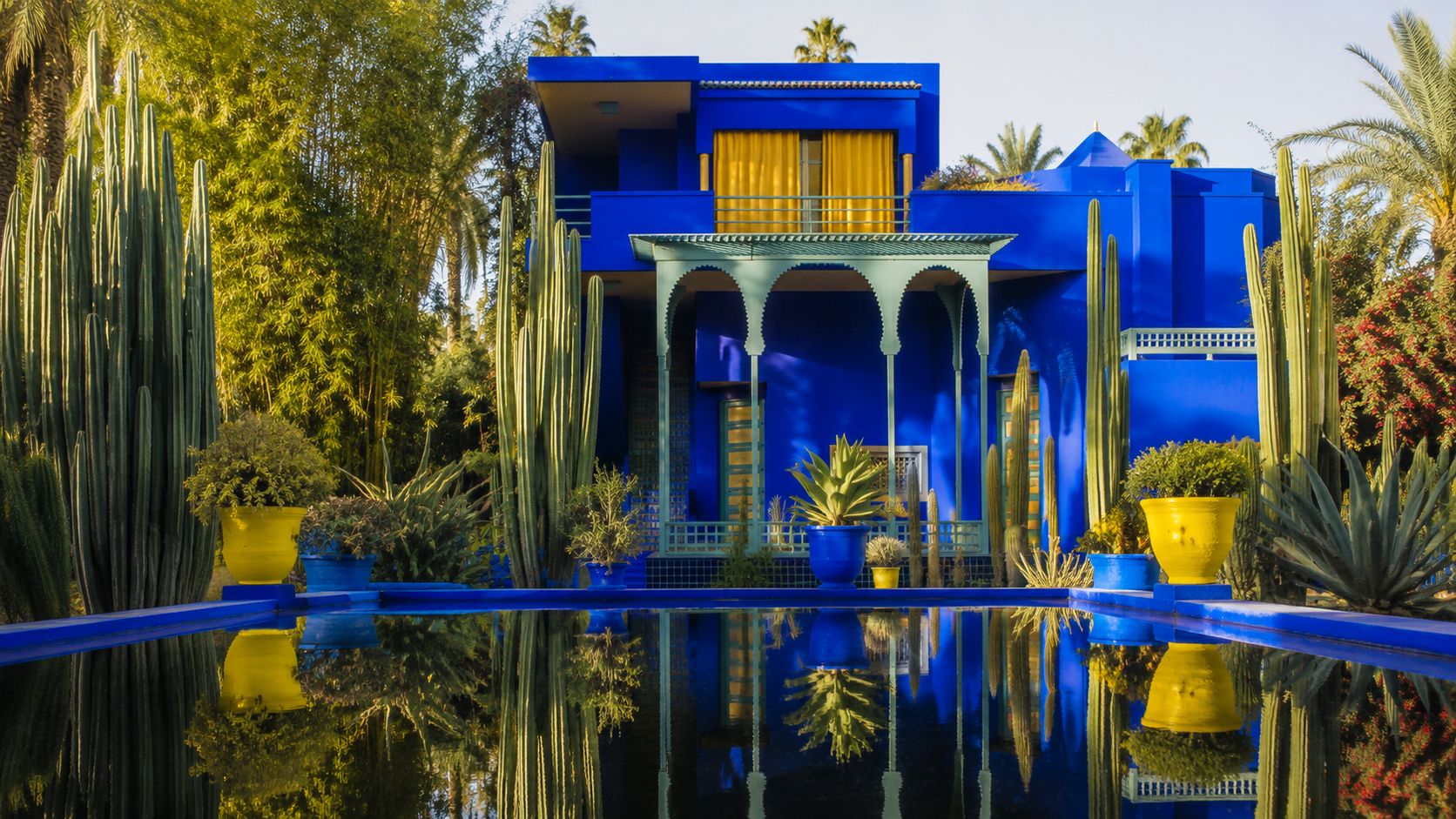
Majorelle Garden provides a deliberate change of pace. Northwest of the medina, the botanical garden combines exotic plants, water features, gravel paths, and distinctive blue-painted buildings. French painter Jacques Majorelle created the garden in the 1920s, and the site now operates as a privately owned museum garden with an attached Berber museum.
The garden is useful for travelers who want design and shade after a dense medina morning. Its focus differs from Menara. Majorelle is a carefully arranged botanical setting, while Menara shows how gardens can function as productive agricultural land and royal retreat space.
Book the pause, not only the entrance
Majorelle requires entry, and visitor demand can be strong. Early morning gives you the best chance of a calmer walk and clearer views of the plant compositions. We generally place it as a planned stop rather than an improvised add-on, especially for couples with limited city time.
Allow one to one and a half hours if you want to include the Berber museum. This is a planning estimate for a full visit, not a guarantee of how long you'll need. Bring water and a hat because some areas receive direct sun. Shoes with a stable sole are useful on uneven gravel and stone paths.
Photography works well here, particularly around the blue structures, cacti, and water features. The drawback is that the garden can feel managed and visitor-focused compared with the less formal spaces inside the medina. That's precisely why it suits travelers who need visual calm rather than more market activity.
6. Menara Garden and Pavilion
Menara Garden explains Marrakech through water, agriculture, and royal leisure. West of the medina, the site centers on a large reflecting pool, an olive orchard, symmetrical plantings, and a nineteenth-century pavilion. The garden's agricultural origins reach back to the twelfth century, when irrigation and cultivation shaped its purpose.
Unlike Majorelle, Menara isn't primarily a botanical collection. It's an open area. The scale gives you changing views of the pool, pavilion, orchard, and Atlas Mountains, but there's limited shade and less decorative detail along the walking paths.
Use the afternoon well
Late afternoon is usually the strongest time for light on the pavilion and mountains. Practical planning guidance recommends arriving three to five hours before sunset for changing color and comfortable exploration. Because this is a fixed time range, confirm sunset conditions and current access before you go rather than treating it as a universal rule.
Arrive early if your priority is fewer visitors. Choose the afternoon if you want the garden when local families often come for walks and the mountain backdrop gains definition. Bring water, sunscreen, and shoes suited to gravel.
Menara works well after a morning in the medina because it reduces the sensory load without requiring a full excursion. It doesn't replace a mountain day. You may see the Atlas range from a distance, but you won't experience village routes or mountain terrain.
A private driver helps when you want Menara between other areas of the city. Walking the full perimeter is more rewarding than stopping only at the pavilion, but the route can be tiring in direct sun. We adjust the visit around your energy rather than forcing every traveler to complete the same circuit.
7. Agafay Desert Day Trip
Agafay offers a rocky desert terrain within reach of Marrakech. It lies 40 kilometers south of Marrakech, beyond the Atlas foothills, according to the supplied route information. The terrain is a semi-desert plateau, not the sand dunes of Erg Chebbi, so travelers should choose it for arid scenery, camp time, camel rides, and mountain views rather than expecting a Sahara dune environment.
That distinction matters. Agafay works when you want an excursion beyond the city without committing to a multi-day Sahara route. It can stand alone as a half or full-day outing, or combine with Atlas villages such as Imlil or Ourika. The more activities you add, the more carefully we need to manage the day's pace.
We arrange the vehicle, guide, camel experience, camp lunch, and any late-afternoon activity in advance. Independent navigation is difficult because camps and routes aren't organized like city attractions. Morocco's Ministry of Tourism states that tourist transport is governed by a formal cahier des charges, with transport-tourism approvals connected to the Ministry of Equipment and Transport, as explained in this Moroccan tourism transport guidance.
Plan for sun and return logistics
Leave early to use more daylight and reduce exposure to peak heat. Bring water, sunscreen, sunglasses, a hat, and long sleeves. Tell your guide if you're uncomfortable with a camel ride. Late afternoon can provide stronger lighting conditions, but we plan the return so you aren't relying on difficult terrain after dark.
For a private route that combines transport, camp arrangements, and local guidance, see our Agafay Desert day trip from Marrakech.
8. High Atlas Trekking from Imlil
Imlil changes the physical character of a Marrakech itinerary. The village sits in a High Atlas valley and serves as a base for day walks and multi-day treks through mountain villages, with views toward the Toubkal massif. Routes range from moderate village walks to demanding multi-day plans with mountain camps.
Honest pacing matters. A traveler who enjoys walking through the medina may still find mountain terrain demanding. We start many first-time trekkers with a single-day route from Imlil, then decide if a longer trek suits their fitness, preparation, and appetite for changing conditions.
A typical day trek from Imlil covers 12 to 16 kilometers, including village stops and lunch with a local family, according to the supplied route planning information. That distance needs to be treated as a route example, not a promise. Weather, terrain, group condition, and the selected village route all affect the day.
Match the guide to the terrain
Mountain guiding follows a different professional pathway from city guiding. Moroccan guidance categories include city and attraction guides, natural-space guides, and region-specific routes. A summary of Morocco's guide qualification requirements notes that city and tourist-attraction guides require specialized tourism and accompaniment training, which reinforces the need to use the right professional for the environment.
Bring water, snacks, layers, broken-in boots, and a headlamp. Tell us about medication or physical concerns before departure. Guides can walk briskly, so agree on your preferred pace at the start. If you arrive from Marrakech on the same day, allow time to adjust before choosing a demanding route.
See our Imlil day trip from Marrakech with High Atlas trekking if you want mountain walking without committing to a multi-day trek.
9. Medina Souk Exploration and Artisan Visits
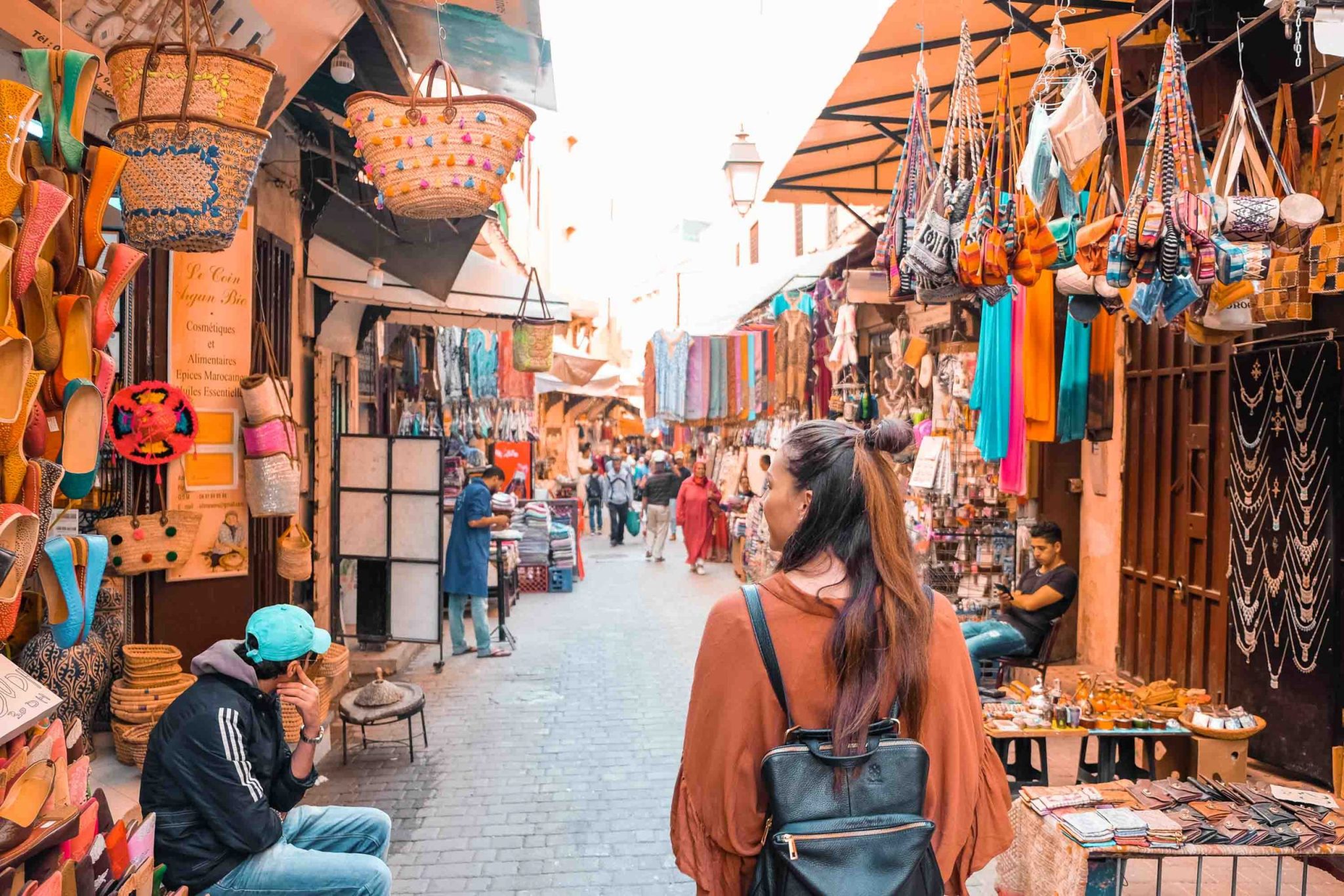
The Marrakech souks aren't one market. They're a network of covered and open-air streets where carpets, metalwork, leather, textiles, spices, pottery, and other goods are made, displayed, and sold. Workshops often sit directly beside retail spaces, so the strongest visit focuses on people and production rather than walking quickly from one shopfront to the next.
We arrange stops with specific artisans, family businesses, and craftspeople who are willing to explain their work. A guide can describe production techniques, establish a clear purpose for each visit, and help you judge materials and workmanship. That doesn't remove bargaining. It gives you a better basis for deciding what deserves your attention and money.
Enter with a clear buying plan
Independent exploration becomes easier after an initial orientation. On a first visit, the maze, changing street widths, motorbikes, and vendor approaches can make the experience tiring. A short guided walk gives you the layout, then you can return to the areas that interest you.
- Set your focus first: Decide whether you're looking for a carpet, leather item, textile, spice, or pottery before entering the souks.
- Use secure footwear: Floors can be wet or slippery, so shoes with grip are more useful than stylish sandals.
- Carry small cash: Many vendors don't accept cards, and smaller denominations simplify ordinary purchases.
- Agree before buying: Establish the price before the transaction. In Moroccan commerce, a verbal agreement carries weight.
A real trade-off is commercial pressure. Some travelers enjoy the negotiation, while others want a quiet cultural visit. Tell us which experience you prefer. We can emphasize workshops and interpretation, limit shopping stops, or build in time for independent browsing after orientation.
10. Day Excursion to Essaouira Coastal Town
Essaouira gives you a coastal counterpoint to Marrakech's dry inland setting. The port town combines a traditional seaside medina, Atlantic beaches, wind, and a working fishing harbor. It lies 180 kilometers west of Marrakech, with a private-vehicle drive of three to three and a half hours, according to the supplied route information.
The distance makes Essaouira a poor choice for a rushed stop. A meaningful full-day visit needs six to eight hours minimum, including the drive and time in town. Those figures are planning guidance, not fixed travel guarantees. Road conditions, stops, weather, and traffic can change the schedule.
We usually include a medina walk, harbor time, beach space, and a meal near the port. Depending on your interests, the route can also include an argan-oil or textile cooperative. The town works particularly well as a rest day between more demanding city, mountain, or desert activities.
Plan around wind and road time
Wear layers and bring a windproof jacket. The ocean breeze can make the coast feel cooler than Marrakech, especially later in the day. Visit the beach early before the wind strengthens, or go late for softer light. Reserve a harbor lunch during high-demand periods, and arrange accommodation ahead if you want to stay overnight.
A private vehicle matters here because the route is long and a rental car adds navigation and parking decisions to an already full day. Our Essaouira day tour from Marrakech can be adapted for couples, families, or travelers who prefer more time in the harbor and less shopping.
Top 10 Must-See Marrakech Attractions Comparison
SiteImplementation complexityResource requirementsExpected outcomesIdeal use casesKey advantagesJemaa el-Fnaa SquareLow, centrally located, easy to add to itineraryMinimal: walk-in, small cash, optional guideOrientation to medina, lively street performances, food samplingFirst-time visitors; cultural immersion; photographersAuthentic street life, free access, strong evening atmosphereBahia PalaceLow–Medium, short guided visit recommendedEntrance fee, guide improves experience, ~1–1.5 hInsight into domestic palace layout and Moroccan decorative artsHistory/architecture enthusiasts; quieter alternative to busy sitesIntact interiors, fine zellige and carving work, manageable crowdsKoutoubia Mosque and GardenLow, exterior visit only, easy to scheduleMinimal: no fee, walkable from medina, best times for lightLandmark orientation, exterior study of Islamic architecture, restful garden stopPhotographers; first-time visitors; architectural interestIconic minaret views, calm green space, free public accessSaadian TombsLow–Medium, controlled entry with limited capacityModest fee, guide recommended, ~30–45 minFocused exposure to funerary architecture and intricate decorative artsHistory-focused visitors; decorative-arts photographersExceptional zellige and stucco work, intimate atmosphere, less crowdedMajorelle GardenMedium, ticketed site requiring transport and timed visitsPaid entry, taxi/shuttle access, ~1–1.5 hBotanical respite, distinctive blue architecture, Berber museum visitGarden enthusiasts; photographers; travelers seeking rest from medinaCurated plant collections, photogenic architecture, cool shaded spacesMenara Garden and PavilionLow, roadside visit, easy to include late afternoonMinimal: free entry, short walk, best in late afternoonOpen-air landscape views, reflecting pool and Atlas backdropLandscape photographers; contemplative visitors; those avoiding crowdsFree entry, strong mountain reflections, expansive peaceful groundsAgafay Desert Day TripMedium–High, requires vehicle, camp booking and logisticsPrivate transport, guide, sun protection, half- or full-day scheduleSemi-desert scenery, camel rides, camp hospitality, sunset viewsShort-time adventure seekers; photographers; those wanting desert tasteAccessible desert experience near Marrakech, dramatic isolation without long travelHigh Atlas Trekking from ImlilHigh, multi-logistics, certified guides and physical prepTransport to Imlil, mountain guide, trekking gear, possible overnightMountain scenery, village interaction, physical challenge and immersionHikers and adventure travelers; cultural immersion seekersAuthentic mountain culture, scalable trek options, homestay opportunitiesMedina Souk Exploration & Artisan VisitsMedium, best with a guide for navigation and introductionsGuide recommended, cash, time, comfortable shoesDirect artisan contact, craft demonstrations, shopping opportunitiesShoppers; craft and culture enthusiasts; travelers seeking local tradesAuthentic production viewing, wide craft variety, negotiation possibleDay Excursion to Essaouira Coastal TownMedium, long round-trip drive, timing considerationsPrivate vehicle or tour, ~3–3.5 h each way, layered clothingCoastal medina experience, fishing-harbor scenes, fresh seafoodTravelers wanting coastal contrast; photographers; seafood loversCooler climate, harbor authenticity, beach and medina combination
Build Your Marrakech Days Around Your Pace
The best Marrakech itinerary depends on how much intensity you want in one day. A medina-focused plan can combine Jemaa el-Fnaa, the souks, Bahia Palace, and the Saadian Tombs. This option gives you the strongest concentration of history, architecture, commerce, and street life, but it also involves uneven walking, navigation challenges, vendor pressure, and limited quiet.
An architecture-and-gardens day creates more contrast. Pair Koutoubia with Majorelle Garden and Menara, then leave enough space for lunch or rest. Koutoubia explains the city through its religious landmark and urban position. Majorelle offers design and botanical detail. Menara opens the view toward the Atlas and shows the relationship between irrigation, agriculture, and royal leisure.
A wider itinerary adds one experience outside Marrakech. Choose Agafay if you want rocky desert scenery, camp time, or a camel ride without a multi-day Sahara route. Choose Imlil if walking, village life, and mountain terrain matter more. Choose Essaouira if the Atlantic, harbor, and a cooler coastal setting provide the contrast you need.
Crowding should influence the order. Marrakech recorded 2.764 million visitors from January to July 2025, up 13% year over year, while July growth slowed to 6% after a much sharper increase in April, according to Bladi's Marrakech tourism report. The practical response isn't to avoid every famous sight. It's to visit the busiest places early, reserve access where appropriate, keep routes geographically logical, and protect recovery time.
We also avoid unsupported promises about fixed opening hours or exact travel conditions. Check current access arrangements before visiting palaces, tombs, gardens, and museums. Transport schedules and road conditions can change, particularly when you're combining Marrakech with mountain or coastal routes.
Marrakech's heritage deserves more than a rushed checklist. UNESCO inscribed the Medina of Marrakesh as a World Heritage Site in 1985, recognizing an old city founded in 1070–1072 by the Almoravids and long used as a political, economic, and cultural center of the western Islamic world, as documented in UNESCO's Medina of Marrakesh listing. A licensed local guide helps connect that long history with the streets, buildings, workshops, and practical decisions you face during the visit.
Moroccan Guides Travel can arrange private Marrakech day excursions or build tailor-made Morocco itineraries linking Marrakech with the Atlas Mountains, Sahara, imperial cities, and Atlantic coast. Tell us your dates, interests, preferred pace, and the regions you want to include, and we'll shape the route around the way you want to travel.
Moroccan Guides Travel offers private Marrakech sightseeing, artisan visits, Agafay excursions, Imlil trekking, and Essaouira day trips with licensed guides and professional drivers. Visit Moroccan Guides Travel to request a free custom itinerary based on your dates, interests, pace, and preferred regions.
Thanks for reading
For over 20 years, we've been guiding travelers across Morocco from the peaks of the Atlas Mountains to the depths of the Sahara. To explore Morocco your own way and support our work, check out our private tours and Tailor Made Morocco Tours.
“I read every request myself, and reply the same day where I can.”
Noureddine Ingrioui
Founder & Tour Guide
Plan Your Private Morocco Tour
Ready to take the next step? Whether you’re ready to book or just exploring possibilities, we’re here to help. Share a few details with us, and our team will reach out
Plan Your Private Morocco Tour
Ready to take the next step? Whether you’re ready to book or just exploring possibilities, we’re here to help. Share a few details with us, and our team will reach out
“I read every request myself, and reply the same day where I can.”
Noureddine Ingrioui
Founder & Tour Guide