Sahara Desert Morocco: The Private Travel Guide
Categories
Experiences
Travel Tips
Destinations
Posted By
Noureddine Ingrioui
Lead Tour Guide
Posted on
You've probably reached the point where Morocco looks easy on a map and complicated on an itinerary. Marrakech, the Atlas Mountains, Aït Ben Haddou, the Sahara, Fes, and the coast all deserve time, but the desert sits beyond the mountain routes and southern valleys. The mistake we see most often is choosing the dunes first and trying to force the rest of Morocco around them.
We plan Sahara trips around your pace, comfort, and tolerance for long road days. Merzouga, Zagora, and Erg Chigaga are different products, not interchangeable names. One gives you the clearest first-time dune experience, another reduces the overland commitment, and the third rewards travelers who want more distance from the main route. We'll show you what each involves on the ground, then explain how we'd connect it with the rest of Morocco.
Table of Contents
Planning a Sahara Desert Morocco Trip From Marrakech
Start with your total time, not with a camp photograph. The Sahara is in Morocco's southeast, while Marrakech sits west of the Atlas Mountains. Every route must cross that mountain barrier before it reaches the oases, kasbahs, rocky plains, and dune systems farther south.
A short itinerary can include a desert night, but it will feel road-heavy. A two-day overnight dash from Marrakech is possible as a concept, yet it leaves little room for proper stops or recovery. We'd choose it only when the desert matters more than the rest of the route.
Choose the route before the camp
A three-day loop gives the route more shape. It can include the Draa Valley on a Zagora route, or the Todra Gorge and the eastern valleys on a Merzouga route. A longer plan can connect the desert with Fes, the Atlas Mountains, or Essaouira without turning every day into a transfer.
Our first planning questions are simple:
- How many nights do you have? A short trip favors Zagora or a tightly planned Merzouga route. More time gives Merzouga or Erg Chigaga room to make sense.
- How do you travel? Couples who want a dramatic first desert image usually prefer Erg Chebbi near Merzouga. Travelers who value quiet camps and rougher tracks may prefer Chigaga.
- What comfort do you need? The camp tier affects the evening, the bathroom arrangement, the bedding, and how much the setting feels like a remote camp.
- What should the desert replace? Don't remove Fes, the Atlas, or the coast automatically. We'd rather shorten the desert route than make the entire Morocco trip a sequence of long drives.
Our planning rule: A desert stop should fit the rhythm of the whole itinerary. It shouldn't consume the trip simply because the map makes the dunes look far away.
Flight planning also matters for couples arriving from the United Kingdom. If you're comparing private aviation with commercial connections, these Marrakesh private flight from London details can help you understand the route before you build the overland section.
What the Sahara in Morocco Actually Means for Travelers
Your desert route starts with a choice of geography, not a promise of endless sand. The Sahara is the world's largest hot desert, covering about 9.2 million square kilometers and spanning nine countries, including Morocco's southern edge according to this overview of the Sahara. From Marrakech, however, you do not cross one uninterrupted sea of dunes. You travel through mountain passes, dry valleys, oases, towns, and former caravan routes before reaching a major dune field.
The sand seas are called ergs. Erg Chebbi lies near Merzouga, Erg Chigaga beyond M'Hamid, and Erg Zaher near the Zagora region. Between them, much of the terrain is reg, or rocky desert, marked by gravel, stone, scrub, and wide open plains. That distinction affects the view from the road, the camp setting, and how much time you spend on rough tracks.
Why the geography changes the itinerary
The High Atlas and Anti-Atlas ranges separate Marrakech from the southern desert. Every route therefore begins with a mountain crossing before opening into drier valleys and plains. Water and settlement then shape the journey. Oases support palms, agriculture, guesthouses, and camps because rainfall is too limited for dependable surface water.
The Moroccan Sahara's principal administrative regions, Guelmim-Oued Noun, Laâyoune-Sakia El Hamra, and Dakhla-Oued Eddahab, had a combined population of 1,040,327 in the cited 2023 white paper published by the Royal Institute for Strategic Studies. For travelers, the point is practical: the southern provinces are inhabited working regions. Residents farm, guide, drive, run guesthouses, and maintain tourism services.
The area also carries major political and historical significance. Official Moroccan timelines place Spanish occupation in 1884, the reorganization as Spanish Sahara in 1958, and the Green March in 1975. That event involved about 350,000 civilian participants, with roughly 10% reported as women in the cited white paper. Keep this history distinct from the camp experience, but understand that the Moroccan Sahara is both a travel destination and a central territorial symbol.
Choosing Between Merzouga, Zagora and Erg Chigaga
The choice comes down to one question. Do you want the easiest introduction to dramatic dunes, a shorter southern route, or a more remote camp reached by rougher tracks?
Merzouga and Erg Chebbi are the clearest choice for most first-time visitors. The dune field is Morocco's best-known desert setting, with dune heights often cited around 150 meters and a field extending roughly 28 kilometers north to south in this Erg Chebbi overview. The camp network is established, camel transfers are straightforward, and you'll find the widest range of accommodation styles. The trade-off is a busier arrival area and a more organized tourism environment.
Zagora is the practical compromise. It's closer to Marrakech, and the dunes are lower and less imposing than Erg Chebbi. The experience suits travelers who want a desert camp without committing to the long eastern route. It has a more accessible, package-oriented feel, so we recommend it when time matters more than dune scale.
Erg Chigaga is the remote option. You reach it through M'Hamid or by an off-road extension from Foum Zguid. The route takes more planning, and the camp infrastructure is less concentrated, but the reward is a quieter setting with larger, wilder-feeling dunes. It makes more sense for return visitors or couples willing to give the desert a larger share of the itinerary.
BaseDrive from MarrakechDune CharacterCamp StyleCrowd LevelMerzougaAround 9 to 10 hours, usually split with a stopTall, dramatic dunes around Erg ChebbiBroadest range, from shared to premium campsBusiest of the threeZagoraRoughly 6 hoursLower dunes and open desertAccessible, established camp productsMore organized and package-orientedErg ChigagaLonger route, with 4x4 access beyond M'Hamid or Foum ZguidLarger, wilder-feeling dunesMore remote camps with fewer nearby facilitiesQuieter
Choose Merzouga if this is your first Sahara visit and the dunes are a major reason for coming to Morocco. Choose Zagora if you have limited time and want a manageable desert addition. Choose Chigaga if silence, remoteness, and rough-road access matter more than convenience.
Our private Erg Chebbi desert tour works well for couples who want the classic eastern route with the stops adjusted around their interests. The price trade-off is straightforward. More distance and remoteness require more vehicle time, fuel planning, and specialist logistics.
The Overland Route From Marrakech to the Dunes
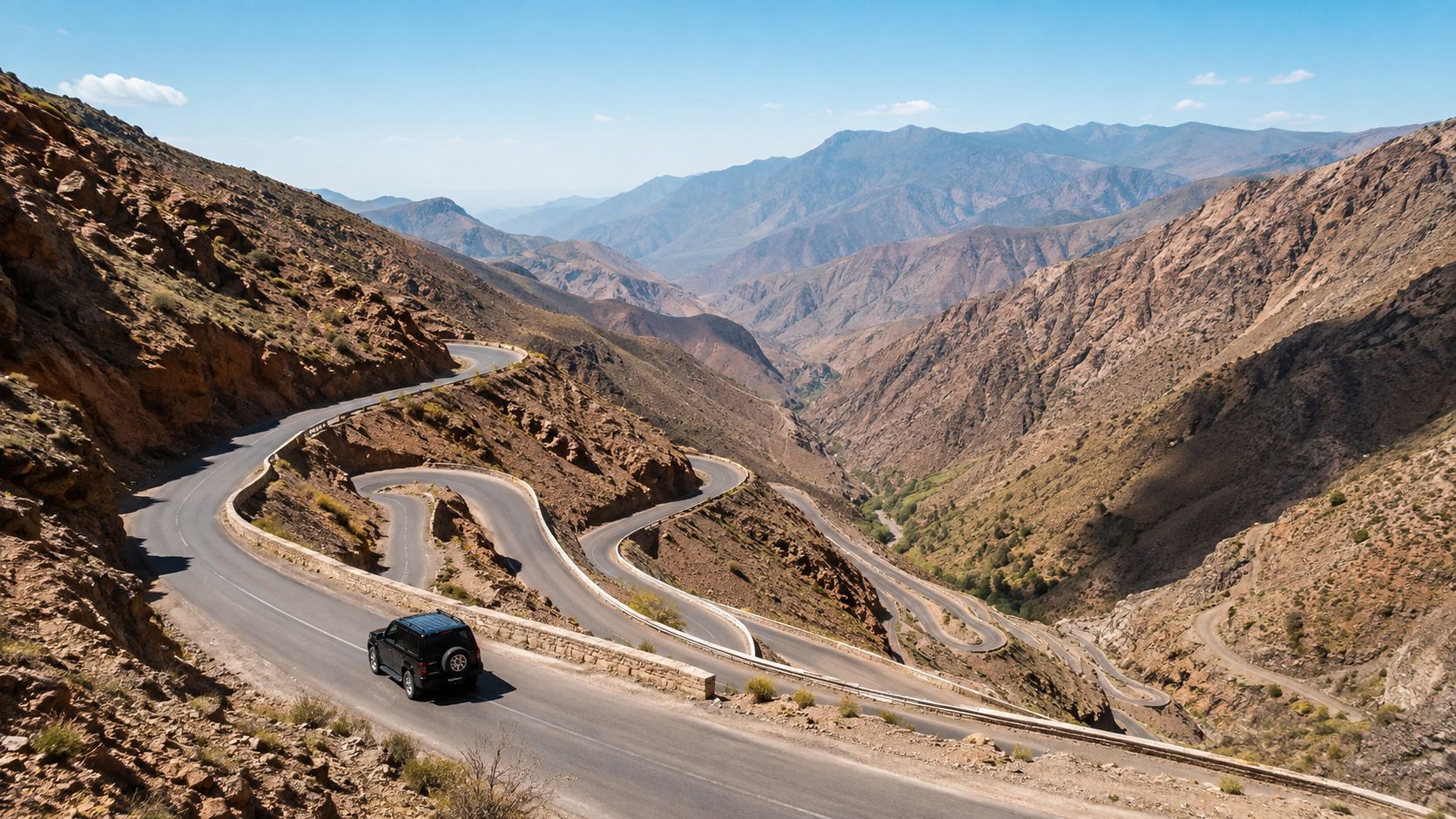
The road south starts with the High Atlas. Your driver climbs toward the Tizi n'Tichka pass through switchbacks, mountain villages, and changing rock formations. Stops depend on weather, road conditions, and what you want to see, but the mountain crossing is a genuine travel stage, not a short transfer.
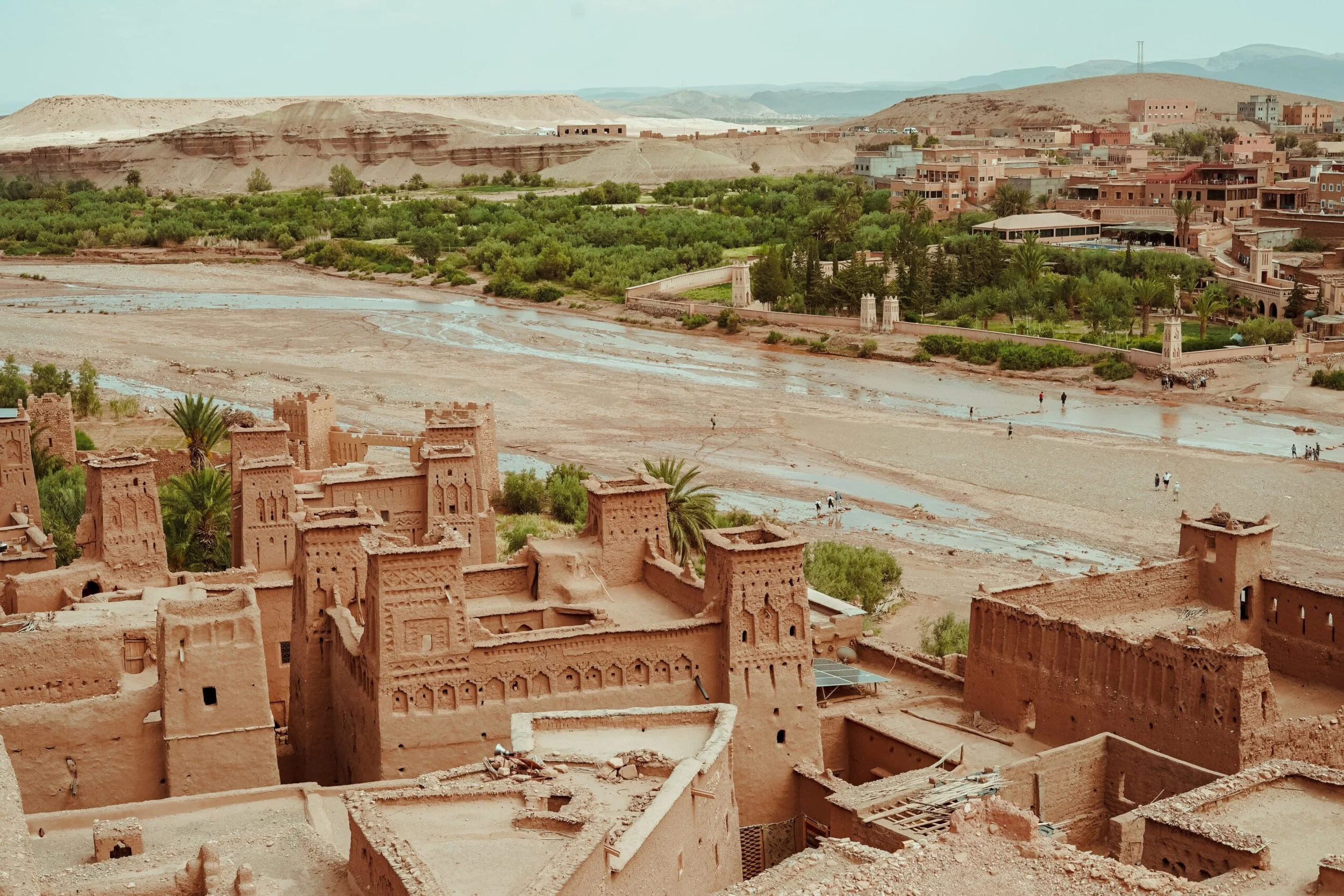
The descent leads toward Ouarzazate, a useful gateway town for the southern routes. Ouarzazate is known for kasbahs and film studios, and it gives us a sensible place to break the drive when the route needs a slower pace. Aït Benhaddou, the Skoura Palmeraie, the Todra Gorge area, and the Dades Valley can all serve as overnight points, depending on whether we're heading toward Zagora, Merzouga, or a wider loop.
What changes after the paved highway
The route feels different once it leaves the main paved road. Southern tracks can be rougher, slower, and more exposed to weather. A private 4x4 gives the driver room to adjust the route, stop when needed, and handle unpaved sections without forcing every passenger into a fixed timetable.
Shared minibuses also tend to prioritize arrival. That can mean rushed visits, fixed meal stops, and little flexibility when someone needs a break. We plan the road around your energy, not around filling every seat.
Signal can thin out in the southern sections, and charging opportunities aren't guaranteed at every stop. Keep your phone, camera batteries, medication, and essential documents accessible. Fuel and food stops need planning too, particularly on routes that continue beyond the main towns.
If you're considering driving part of Morocco yourself, review these 2026 international car rental tips before deciding. For the Sahara, we usually recommend a professional driver because mountain roads, remote tracks, and route timing create more responsibility than many first-time visitors expect.
Sample Private Itineraries That Pair the Desert With the Rest of Morocco
The focused route and the grand loop serve different travelers. The first gets you to the dunes quickly. The second treats the desert as one part of a wider Moroccan circuit.
Itinerary A for a focused desert run
Day one runs from Marrakech toward Aït Benhaddou and Ouarzazate. We'd use a comfortable hotel or kasbah-style guesthouse, with meals arranged according to the property and your preferences. The day includes a mountain crossing and several hours on the road, so we'd keep the sightseeing selective rather than promise every stop.
Day two continues through the southern valleys toward Todra Gorge and Erfoud, then reaches the Merzouga area. You transfer toward Erg Chebbi by camel or 4x4, depending on your preference, and stay at a desert camp. Dinner is normally included at camp, while lunch is arranged on the road.
Day three starts with the dunes and the return toward Marrakech. This is a demanding day if completed as a direct return, so we'd use this version only for travelers who accept a fast pace. Families with young children and older travelers should add time instead of treating the return as an afterthought.
Itinerary B for a wider Morocco loop
A seven-day Grand Loop can link Marrakech, the Atlas, Aït Benhaddou, the desert, the Skoura and Dades valleys, then continue north through the Middle Atlas to Fes, the Rif, and Chefchaouen before returning. Accommodation can shift from a city riad to valley guesthouses and a private desert camp. Breakfast is commonly included at lodging, while lunch and dinner should be specified clearly in the itinerary.
ItineraryDurationDesert BaseDaily DriveBest ForFocused desert run3 daysErg Chebbi near MerzougaLong, concentrated road daysFirst-time visitors with limited timeGrand Loop7 daysDesert stop within a wider circuitMixed, with some longer transfer daysCouples who want desert, cities, and northern Morocco
For a broader version, see our Marrakech and Grand Tour of the Sahara Desert. We'd adapt the sequence for families, retirees, or corporate teams by reducing consecutive long drives and choosing hotels with easier access.
The itinerary can also swap Erg Chebbi for Erg Chigaga, add more time at Aït Benhaddou, or extend toward Essaouira. A private route earns its value when the plan changes around your needs.
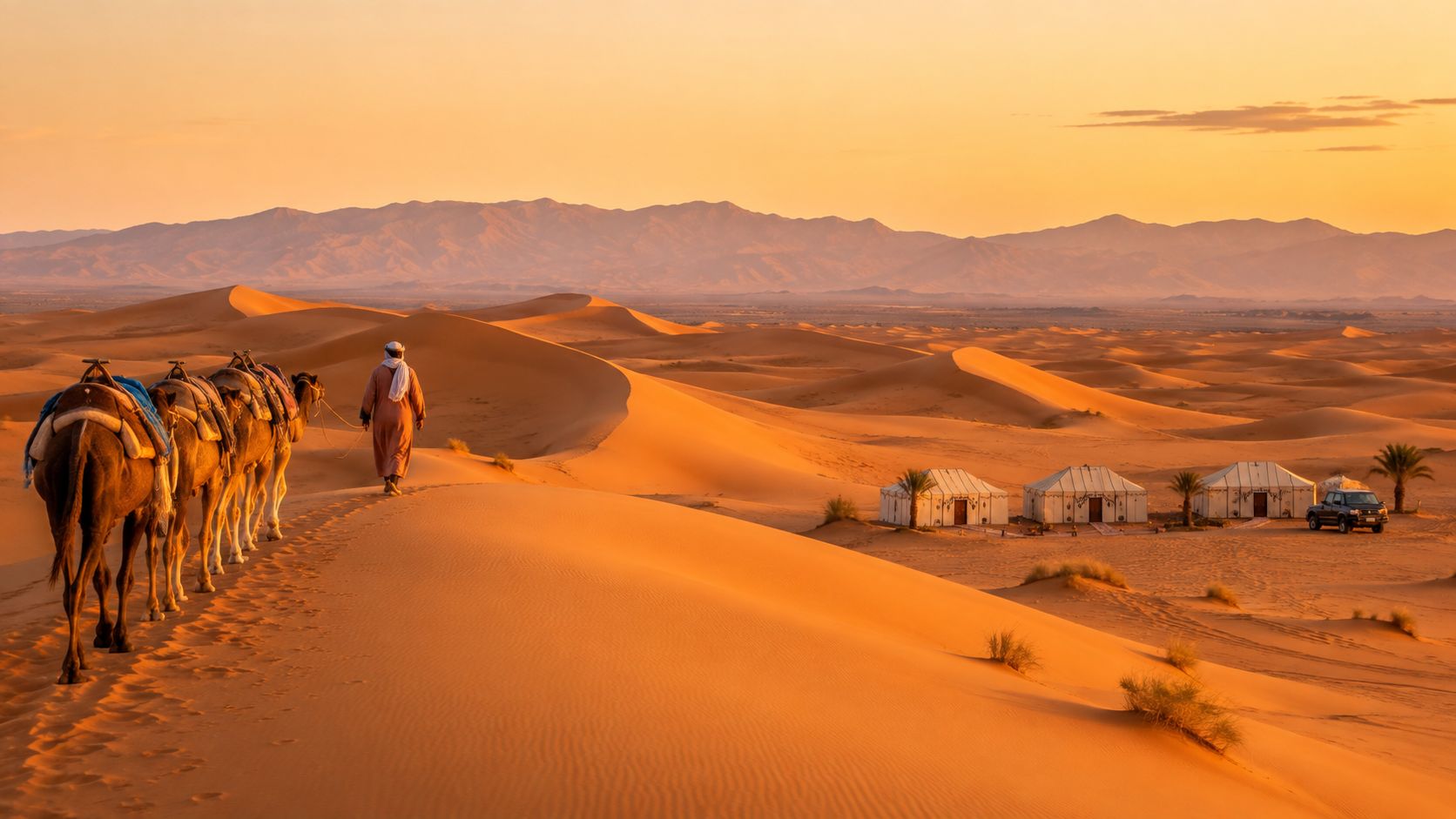
Desert Camps, Camel Treks and What an Evening in the Dunes Really Looks Like
A desert camp isn't one standard product. The label can describe a simple shared tent or a private tent with a proper bathroom, so ask for the exact setup before you book.
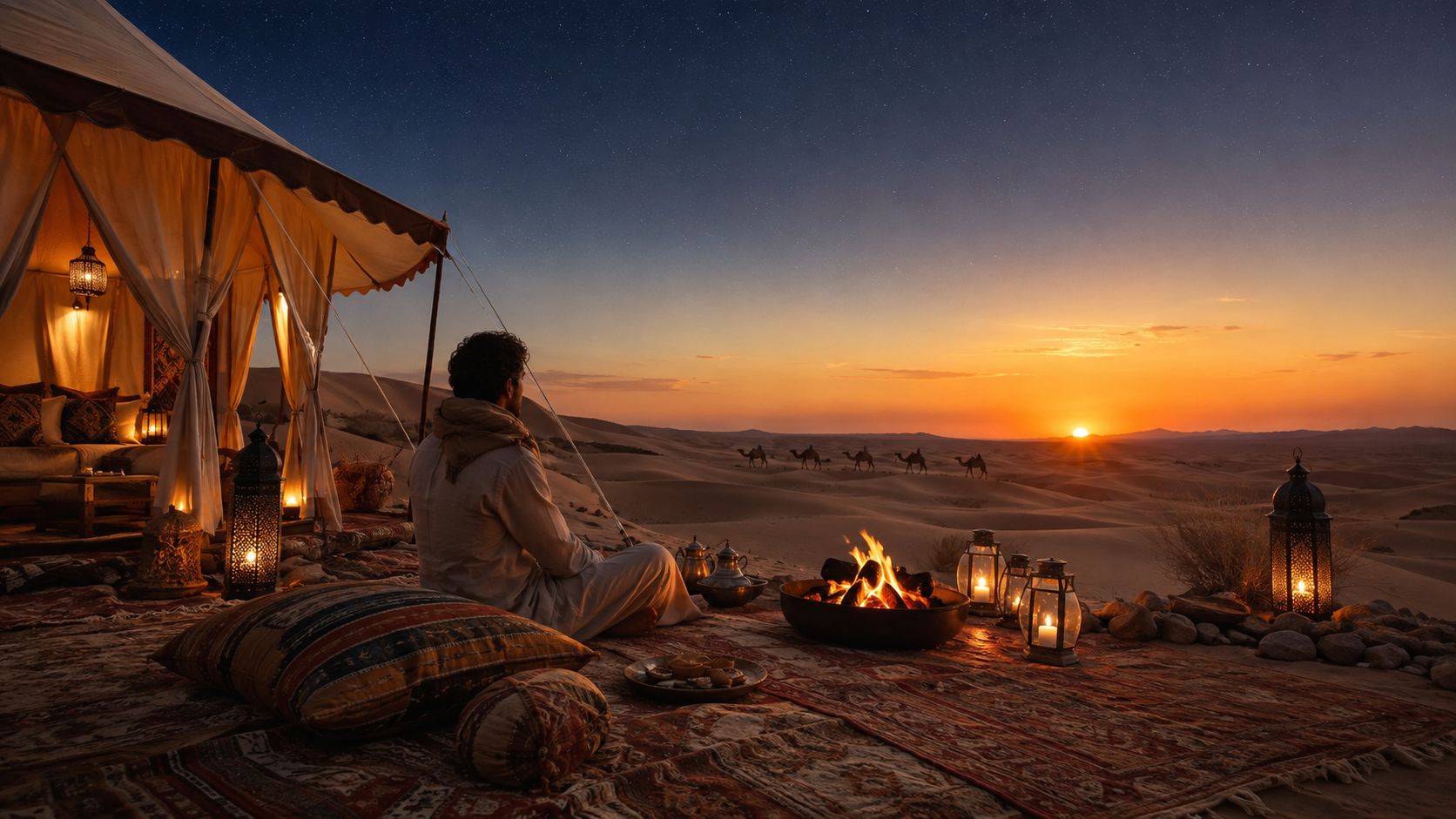
A standard shared camp usually has communal tents, shared bathrooms, and a simpler dinner area. A comfort camp gives you a private en-suite tent and more separation from other guests. A premium camp may include raised beds, private showers, Berber carpets, and a quieter position among the dunes. It will feel more comfortable, but it won't remove the sand, wind, or isolation.
How the transfer works
Most visitors reach camp from the edge of the dunes by camel. The transfer is commonly planned around sunset, and you can often walk sections if the saddle becomes uncomfortable. A 4x4 transfer is the better choice if you have back, hip, knee, or balance concerns.
Quad biking is generally a paid add-on. It suits travelers who want speed and engine access, but it changes the sound and pace of the desert. We'd keep the camel transfer or a guided walk if your priority is a quieter camp arrival.
The evening usually follows a simple rhythm:
- Arrival: Staff show you to the tent and explain the camp facilities.
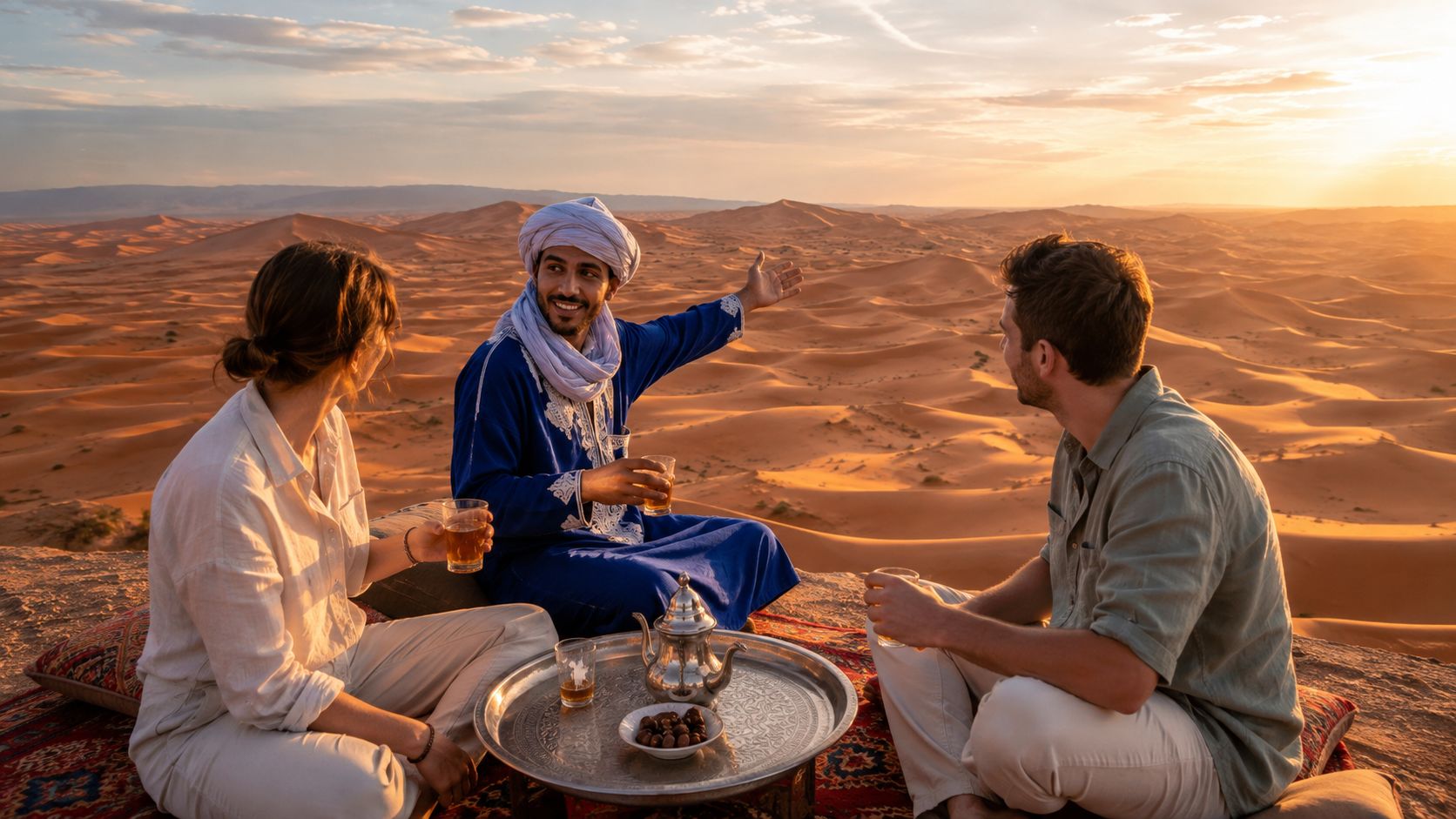
- Mint tea: Tea gives everyone time to settle before sunset.
- Dune climb: Guests walk to a nearby high point for the changing light.
- Dinner: Tagine is served around the fire or in the dining tent.
- Music: Berber drumming may follow dinner, depending on the camp.
- Night sky: Stargazing works best away from strong artificial light.
- Early departure: Many camps call guests before sunrise, often around 5 a.m., so the morning transfer can begin on time.
Practical rule: Treat the camp as comfortable wilderness, not as a hotel that happens to sit on sand.
Expect large temperature swings, sand in bags and shoes, and limited charging. Premium amenities improve sleep and privacy. They don't create true wilderness, and a remote camp may offer fewer facilities than a more established one.
Best Season, Packing, Safety and Accessibility for Families and Teams
The Moroccan Sahara has an arid climate with annual precipitation generally below 100 millimeters. Reference hubs include Zagora at 61 millimeters, Merzouga at 59 millimeters, and Dakhla at 33 millimeters as listed in this climate reference. Inland summer maximums can exceed 44°C, so heat affects walking, driving, equipment, and sleep.
We prefer the shoulder windows from October through November and March through April for most couples. Days are easier to manage, while nights still require layers. December and January can be cold after dark, particularly in open dune areas. Summer is a poor fit for travelers who want long walks or active midday schedules.
Pack for transfers, not for a hotel lobby
Use a soft day bag for the camel transfer and leave rigid luggage with the driver or at your overnight accommodation. Prioritize:
- Sun protection: A buff, polarized sunglasses, SPF 50, and a hat reduce exposure on the dunes.
- Layering: Bring mid-weight layers for morning and evening, plus lighter clothing for the warmer part of the day.
- Footwear: Closed-toe shoes work better on rocky regs and around camp than delicate sandals.
- Health supplies: Carry prescription medication, personal essentials, and enough water for the route.
- Power and documents: Keep charging equipment, passports, and important booking details in your day bag.
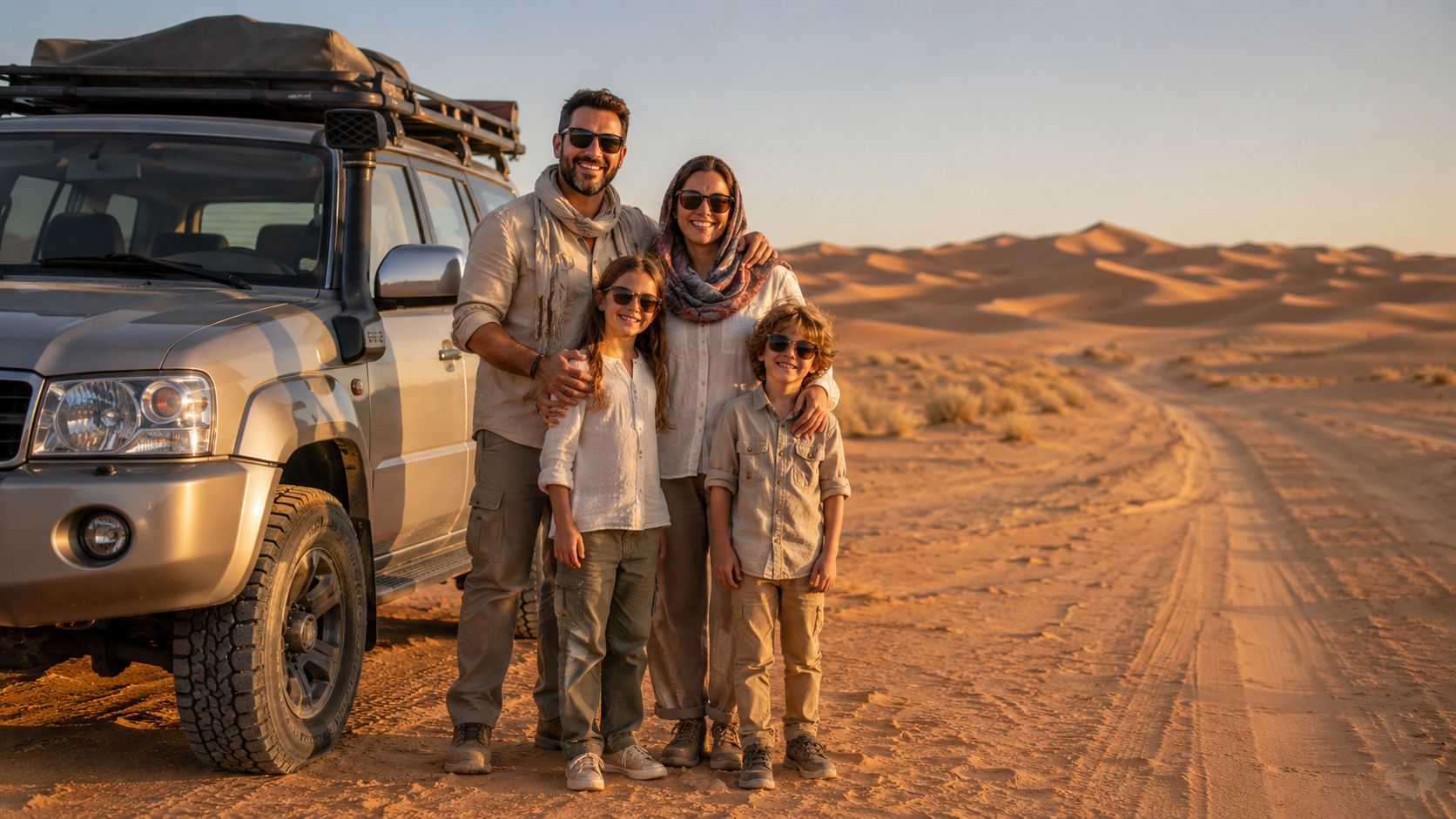
Families with young children should request a camp with shorter camel loops, shaded dining space, and a 4x4 shuttle option. Older travelers should ask for tent placement near the dinner area and a drop-off point that avoids unnecessary walking over uneven ground.
Corporate groups need the same practical preparation. We'd request drivers trained in first aid, confirm dietary needs early, and identify who needs a quieter tent or easier access. Tell us about mobility, medical, and food requirements before the route is fixed. Respect for Amazigh hosts also matters. Dress sensibly, ask before photographing people, and follow camp guidance about water and waste.
The climate is shaped by a sharp moisture gradient between Atlantic and Mediterranean systems to the north and the Intertropical Convergence Zone to the south as described in this regional climate study. In practical terms, oases and camps depend on managed or groundwater-fed systems rather than dependable rainfall.
Why a Private Guided Trip With a Local Operator Changes the Experience
You can reach the Moroccan Sahara independently, but self-driving, shared transport, and a private local operator create very different trips.
Shared transport follows one timetable. It usually favors the most established route and camp network, then moves when the group is ready. You won't have much room to add a gorge stop, change the dinner plan, or slow down because one person is tired.
Self-driving gives you control, but it also puts the decisions on you. Winter conditions on Atlas passes, unpaved pistes near M'Hamid, remote fuel planning, and night driving all require attention. A map won't tell you how a road feels after weather changes or where a practical stop fits into the day.
What a private operator handles
A private local operator can sequence the desert into a wider Morocco route and adjust the plan around your actual pace. That might mean:
- Changing the desert base: Move from Zagora to Chigaga when remoteness matters more than convenience.
- Adjusting the camp: Match shared, comfort, or premium accommodation to your budget and sleep requirements.
- Managing the road: Add Todra Gorge, Skoura, or Aït Benhaddou without forcing the entire itinerary into a fixed group schedule.
- Extending the route: Continue toward Fes, Chefchaouen, or Essaouira when the wider trip calls for it.
- Interpreting the setting: A local guide can explain customs, terrain, and the difference between a commercial stop and a community-based visit.
Drivers also coordinate practical details, from meal timing to camel transfers. They can help interpret conditions on the road and communicate with camp staff when plans need to change.
For couples who value control and comfort, we recommend booking direct with a Moroccan-licensed company. Our tailor-made Morocco tours are built privately, with licensed local guides and professional drivers, rather than placing you in a group timetable. Moroccan Guides Travel operates from Marrakech and connects the Sahara with the Atlas Mountains, imperial cities, and Atlantic coast through custom itineraries.
If you're planning your first Sahara Desert Morocco trip, tell Moroccan Guides Travel how many days you have, which places matter most, and what level of camp comfort you want. Request a free custom itinerary from Moroccan Guides Travel, and we'll build a private route from Marrakech around your pace, preferred desert base, and wider Morocco plans.
Thanks for reading
For over 20 years, we've been guiding travelers across Morocco from the peaks of the Atlas Mountains to the depths of the Sahara. To explore Morocco your own way and support our work, check out our private tours and Tailor Made Morocco Tours.
“I read every request myself, and reply the same day where I can.”
Noureddine Ingrioui
Founder & Tour Guide
Plan Your Private Morocco Tour
Ready to take the next step? Whether you’re ready to book or just exploring possibilities, we’re here to help. Share a few details with us, and our team will reach out
Plan Your Private Morocco Tour
Ready to take the next step? Whether you’re ready to book or just exploring possibilities, we’re here to help. Share a few details with us, and our team will reach out
“I read every request myself, and reply the same day where I can.”
Noureddine Ingrioui
Founder & Tour Guide