Categories
Accommodations
Activities
Food
Experiences
Travel Tips
Tours
Destinations
Posted By
Noureddine Ingrioui
Lead Tour Guide
Posted on
You're probably looking at a map of Morocco, counting the days before your flight, and wondering if Merzouga can fit into a short stay in Marrakech. It can, but a 3 days desert trip from Marrakech demands realistic expectations. You'll cross the High Atlas, pass through the kasbah country, reach the Erg Chebbi dunes, spend a night in a desert camp, and then make the long drive back.
We run these trips as private, custom-built itineraries at Moroccan Guides Travel. We don't run group tours. Our role is to plan the route, use licensed local guides and professional drivers, and tell you when three days fits your travel style, and when it doesn't.
Table of Contents
- Day 1 from Marrakech to the Dades Valley
- Day 2 from Dades to Merzouga
- Day 3 for the return to Marrakech
Understanding the 3-Day Marrakech Desert Trip
A three-day trip to Merzouga is a road trip with a desert overnight, not a quick excursion. The direct drive from Marrakech to Merzouga is about 560 km by road, with nonstop driving estimated at roughly 9 to 10 hours one way depending on the route and conditions, according to route planning information for the Marrakech to Merzouga drive.
That distance explains the format. You can't responsibly treat Merzouga as a same-day destination from Marrakech. The route crosses mountain roads, valleys, towns, and long pre-desert stretches. Stops for food, photographs, road conditions, and rest all affect the day.
Practical rule: Three days is the minimum practical duration for reaching Erg Chebbi from Marrakech and spending one night in the desert.
Many travelers ask if they'll spend too much time in transit. The honest answer is that you'll spend a substantial part of the trip in the vehicle. The one-way drive is around 9 to 10 hours, so this format works best when you see the route itself as part of the experience, rather than expecting several full days among the dunes. That distinction is also explained in this practical guide to what a Marrakech to Merzouga private desert tour involves.
What the route gives you
The reward is the variety packed into a short itinerary. You'll move from Marrakech through the High Atlas and into regions associated with Aït Ben Haddou, Ouarzazate, the Dades Valley, Todra Gorge, and the desert around Merzouga. The route gives you a strong introduction to southern Morocco, with a clear contrast between mountain terrain, oasis valleys, rocky plateaus, and sand dunes.
The trade-off is pacing. You won't have the time for long village walks, extended hikes, or unplanned detours. A private vehicle helps because we can adjust stops around your interests, but it can't remove the geography.
For a first visit, this trip makes sense when reaching the Erg Chebbi dunes matters more than a relaxed schedule. If your priority is comfort, slow mornings, and shorter driving days, a longer itinerary is more suitable. Our guide to the Sahara Desert in Morocco gives additional context on how the desert fits into a wider Moroccan route.
A Standard 3-Day Private Tour Itinerary
A three-day private tour is a fast road trip with one desert night, not an extended stay deep in the Sahara. Day one crosses the High Atlas and reaches the Dades Valley. Day two continues to Merzouga, and day three returns to Marrakech. This division follows the practical operating pattern for the route and leaves limited time for long sightseeing sessions. Independent itinerary guidance for a three-day Marrakech to Merzouga tour follows the same broad sequence.
Day 1 from Marrakech to the Dades Valley
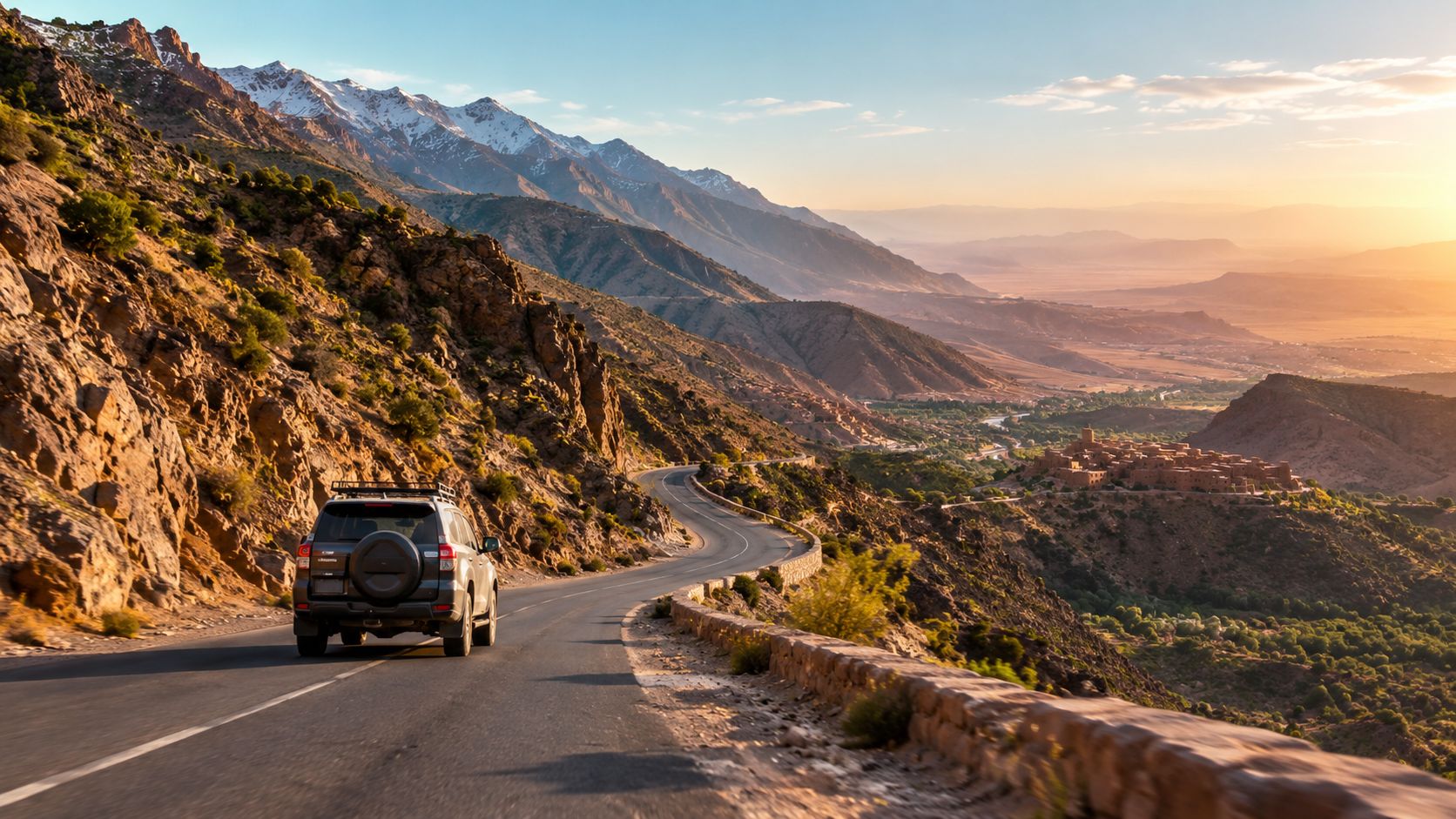
We normally leave Marrakech early. The road climbs through the High Atlas Mountains, with slower, winding sections that take longer than the map suggests. Your driver-guide manages the timing and selects safe places for brief stops.
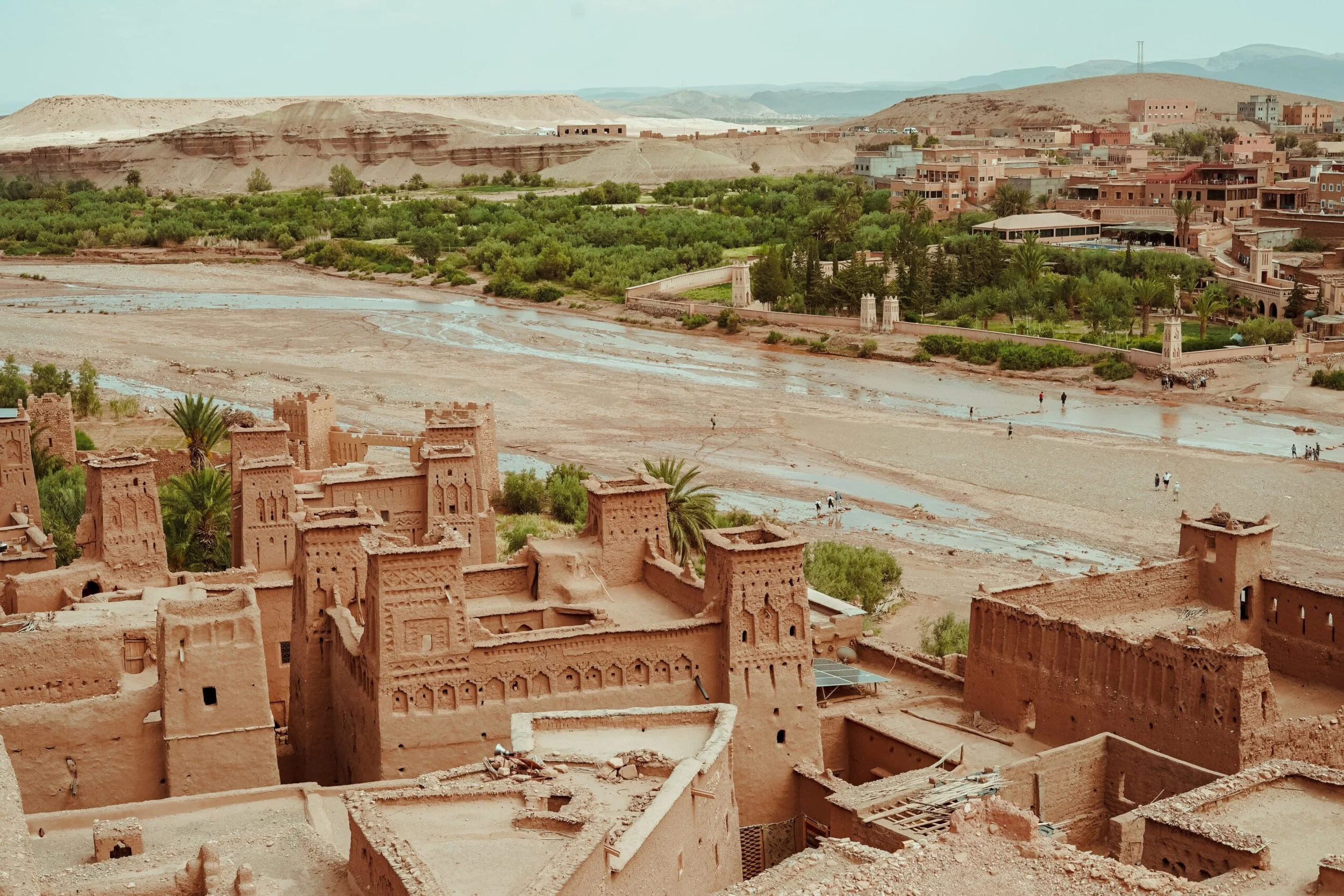
Aït Ben Haddou is the main cultural visit. This UNESCO-listed ksar is among southern Morocco's most recognizable sites, and its earthen buildings make more sense when seen within their natural surroundings. We allow time to walk through the settlement and examine the architecture. Timing matters. A rushed visit becomes a quick photo stop, while an overly long stay can delay arrival in the Dades Valley after dark.
The route continues toward Ouarzazate, then through the Valley of Roses and the Dades area. Standard planning places this first leg at roughly 310 km, from Marrakech toward the Dades Valley, within the wider three-day route, according to route planning guidance for Marrakech to the Sahara.
We recommend staying overnight in the Dades Valley or near Tinghir. The location breaks up the long transfer before the desert and gives the second day a practical target, reaching Merzouga without relying on a late or unsafe arrival.
Day 2 from Dades to Merzouga
The second day passes through the Todra Valley toward Todra Gorge. The gorge changes the scenery after the broad valley views of day one. Depending on road conditions and your interests, we may stop for a short walk, photographs, or tea.
After Todra, the route crosses pre-Sahara terrain toward Erfoud and Merzouga. The Dades to Merzouga driving segment is commonly planned at about 200 km, although stops and road conditions affect the total time. The distance forms part of the wider standard route planning guidance for Marrakech to the Sahara.
Arrival at the desert edge in the late afternoon gives the itinerary its main purpose. You have time to transfer to the camels and cross the Erg Chebbi dunes before sunset. The camel ride is generally slow, and the camp team coordinates luggage and arrival details. This is the most immersive part of the schedule, but it remains a single overnight experience rather than several days among the dunes.
Day 3 for the return to Marrakech
The third day carries the heaviest driving load. After breakfast and, when conditions allow, a sunrise view over the dunes, we leave Merzouga for Marrakech.
The return is a full-day road journey. We plan stops around safety, food, and rest instead of promising a long list of attractions. Route planning commonly allows roughly 8 to 9 hours of driving for the return. Other itinerary structures allocate about 6 to 7 hours on Day 1, 4 to 5 hours on Day 2, and 8 to 9 hours on Day 3, as shown in a practical three-day itinerary outline.
We do not promise a late-afternoon sightseeing program in Marrakech. Traffic, weather, roadworks, and mountain conditions can all affect the arrival time. Keep the final evening flexible, and judge this tour as a demanding but rewarding Moroccan road trip with a desert overnight.
Your Vehicle and Private Driver-Guide
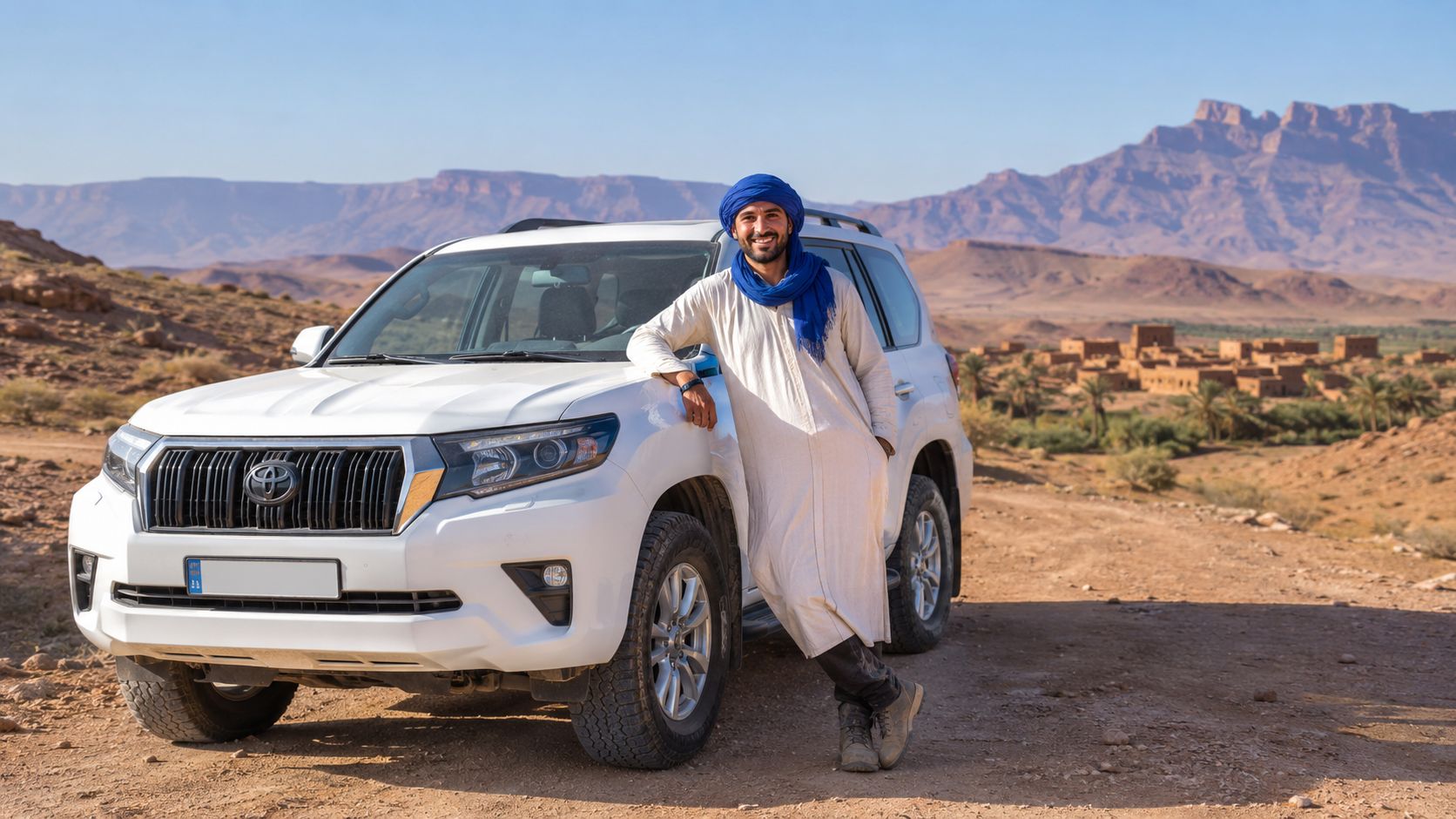
Long hours on Morocco's roads make the vehicle and driver part of the itinerary, not a minor booking detail. The route includes mountain passes, valley roads, and open stretches where comfort, visibility, and concentration matter. We use modern, air-conditioned 4x4 vehicles suited to extended travel and changing road conditions.
At Moroccan Guides Travel, private trips are operated by owner-operated licensed local guides and professional drivers. Your driver-guide does more than move the vehicle between hotels. They coordinate departure times, explain sites along the route, organize practical stops, and adjust the day when weather, traffic, or road conditions change.
Why professional driving matters
Moroccan roads require careful planning, particularly on mountain sections. We recommend licensed professional drivers and avoiding night travel on mountain roads, following this safety guidance for visiting the Moroccan desert.
That guidance shapes the schedule. We do not shorten the route by driving after dark to promise extra sightseeing. Instead, we allow time for roadworks, weather, photographs, meals, and travelers who find continuous driving tiring.
Safety comes before the timetable. An empty-looking stretch of terrain is not automatically safer. Mixed traffic, pedestrians, cyclists, mountain roads, and prolonged driving all demand attention.
A private vehicle gives you options that a fixed group schedule cannot. If you need a short break, we can stop at a suitable location. If one site matters more than another, we can explain the time trade-off and adjust the plan instead of following a rigid checklist. This flexibility helps couples, families, and travelers aged 55 and above manage a demanding road trip at a comfortable pace.
What private means in practice
Private travel does not make every road segment short. The distance remains, and the three-day format still involves substantial driving. It means the vehicle is reserved for your party, the route is discussed before departure, and the guide can work around your priorities.
We keep the operating model clear. Moroccan Guides Travel runs private tours only, with custom-built itineraries covering the Sahara, Atlas Mountains, imperial cities, and Atlantic coast. We explain what the route can realistically include before you book. The result is best understood as a well-supported Moroccan road trip with one desert overnight, rather than a long, slow immersion in the Sahara.
The Desert Camp Experience in Erg Chebbi
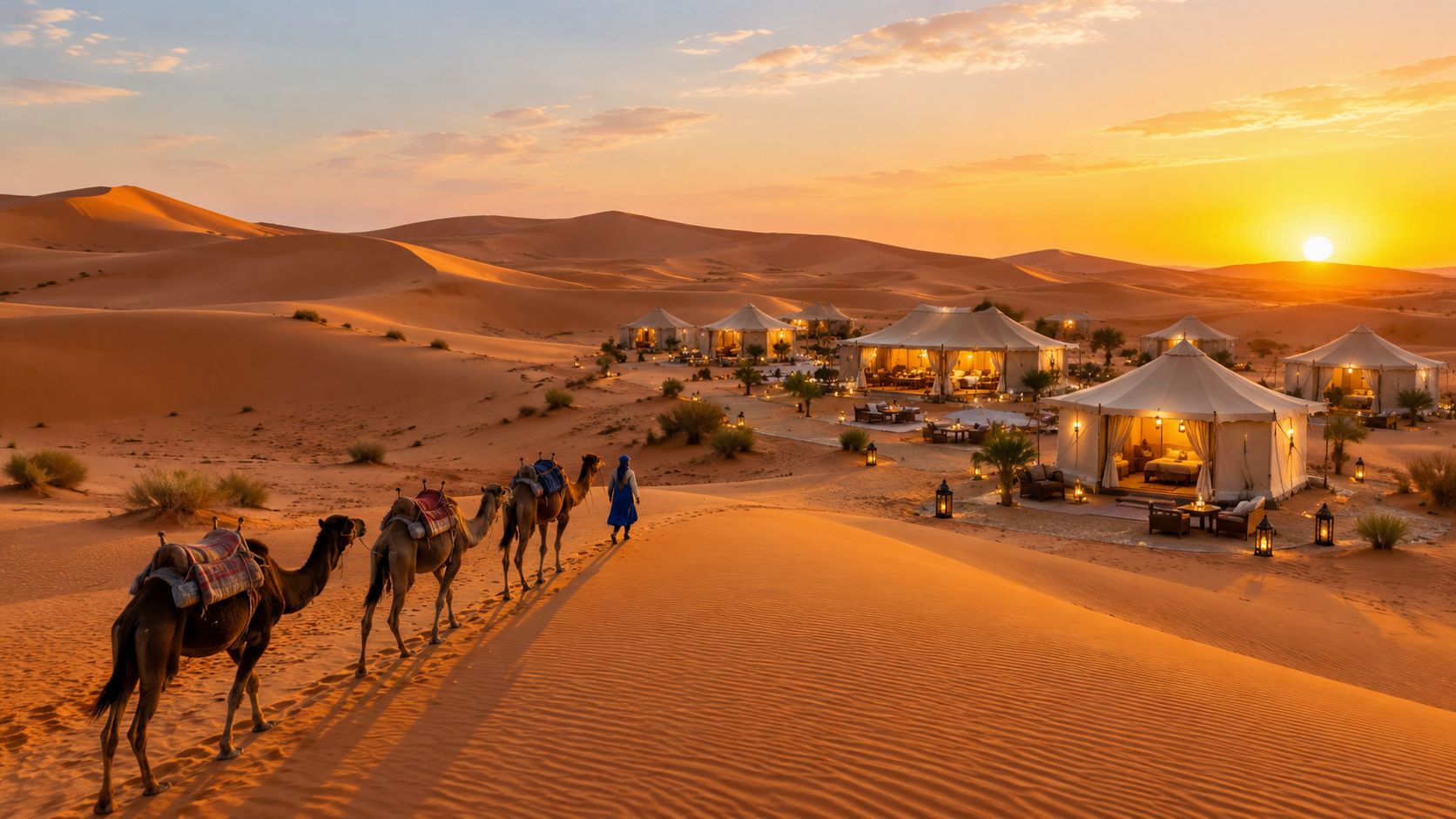
The night at Erg Chebbi is the reason most travelers accept the long road transfer. The experience starts near Merzouga, where you leave the vehicle and continue toward the camp by camel or another arranged transfer, depending on the package and your physical needs.
A late-afternoon camel trek is the usual sequence. The timing helps you reach the camp around sunset, when the dunes are cooler and the light changes quickly. You'll receive guidance on mounting, dismounting, and handling your belongings. Camel riding can feel unfamiliar, so tell us in advance about back, hip, or knee concerns.
What camp standards mean
“Desert camp” covers different levels of comfort. A standard camp generally offers a private sleeping tent, a proper bed, shared facilities, and organized meals. A higher-comfort camp may provide more space, stronger furnishings, private bathrooms, and ensuite facilities, depending on the camp selected.
The setting remains remote. Even a luxury desert camp isn't the same as a city hotel. Electricity, hot water, internet access, and bathroom arrangements can vary. We confirm the camp standard before booking rather than assuming that the word “luxury” means the same thing everywhere.
The camp usually includes:
- Private accommodation: Sleeping arrangements are normally assigned by room or tent, according to the selected camp.
- Dinner: The evening meal is organized at the camp and reflects Moroccan cooking traditions.
- Music and gathering: Staff may provide music around a fire or in a communal area.
- Dune views: Sunset and sunrise are central parts of the experience, provided weather and timing cooperate.
Making a sound camp choice
Desert tourism has grown in popularity, so camp quality and cultural grounding deserve attention. Recent coverage of Morocco's growing desert tourism recommends looking beyond the lowest quote and assessing the camp, the route, and how the trip fits into a broader Morocco circuit.
We ask practical questions before confirming a camp. Is the tent private? Is the bathroom inside the tent or shared? How is luggage transferred? What happens if someone doesn't want to ride a camel? Clear answers tell you more than a polished description.
The night is valuable because it changes the pace of the route. You leave the road, spend time among the dunes, and wake in a very different setting. It still remains one night within a demanding overland program, so the right expectation is important.
What to Pack for Your Desert Trip
Pack for movement, sun, dust, and changing temperatures. You don't need a large suitcase for three days, and keeping your main luggage organized makes transfers easier.
Clothing and footwear
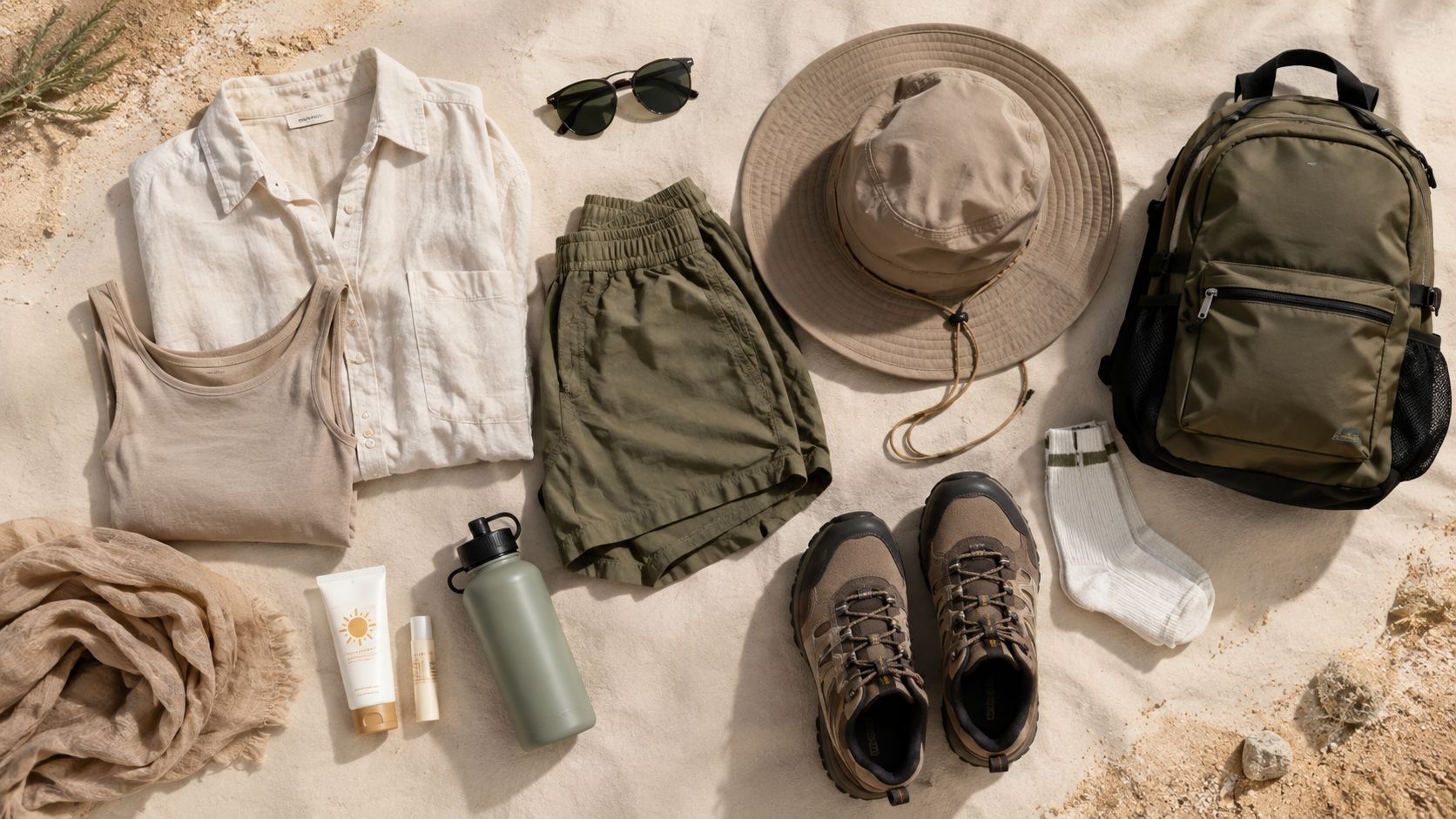
- Use layers: Wear light, breathable clothing during the day and pack a warmer layer for the desert evening and early morning.
- Choose loose trousers: They're more comfortable for sitting in a vehicle and riding a camel than restrictive clothing.
- Bring a scarf: It can protect your face and neck from sun and dust. It's also useful in the vehicle when the air-conditioning feels cold.
- Pack sturdy shoes: Comfortable walking shoes work for Aït Ben Haddou, gorge stops, camp paths, and uneven ground.
- Add sleepwear: A separate comfortable layer helps when camp temperatures change after sunset.
Don't pack new shoes for this trip. Long road days and dune walking are poor conditions for breaking in footwear.
Sun, health, and food
Bring a hat, sunglasses, and sunscreen. Apply protection before reaching the dunes, not after you start walking. Personal medications should stay in your day bag, along with any motion-sickness medicine you already know works for you.
Carry water in a reusable bottle or sealed container. We'll explain where practical stops are available, but you shouldn't rely on finding a shop at every point along the route.
Long drives can make it useful to carry simple snacks. For ideas that travel well, Gym Snack's guide to travel protein offers practical options for keeping food compact and easy to manage.
Documents and electronics
- Keep documents accessible: Carry your passport, travel insurance details, booking information, and emergency contacts in your day bag.
- Protect electronics: Sand can enter small gaps, so use a pouch or sealed bag for phones, cameras, and chargers.
- Bring a power bank: Charging access may be limited during parts of the route and at camp.
- Pack spare storage: If you plan to take many photographs, bring an extra memory card or confirm your phone has available space.
Seasonal planning also matters. Our guide to the best time to visit Morocco can help you decide which clothing layers and sun protection to prioritize.
Is This Trip the Right Choice for You?
You leave Marrakech for the High Atlas, cross southern valleys and kasbah country, and reach Erg Chebbi for one desert night before returning north. A three-day Merzouga trip is a demanding Moroccan road trip with a desert overnight, not a slow or deep Sahara immersion. It suits travelers who want broad regional highlights in limited time and accept long hours in the vehicle.
The route brings together Marrakech, Aït Ben Haddou, the Dades area, Todra Gorge, and Erg Chebbi. We plan stops around the road conditions and your interests, but the driving remains substantial. The desert camp is the main overnight experience, while many sights are seen through shorter visits and viewpoints.
Three days suits these travelers
Choose this format if you:
- Have limited time: You want Merzouga included in a short Morocco itinerary.
- Prefer private travel: You want your own vehicle and guide instead of a fixed group schedule.
- Enjoy scenic road travel: Mountain passes, valleys, kasbahs, and changing scenery are part of the appeal.
- Want one desert night: You are satisfied with a focused Erg Chebbi visit rather than several desert nights.
- Can manage long drives: You are comfortable with extended time on the road, especially on the return day.
This schedule can tire families with very young children. Travelers who dislike long car journeys should add time or choose a shorter route. Honeymooners looking for quiet mornings and unhurried camp time will usually be happier with fewer driving hours.
A four-day or five-day plan allows more rest, longer stops, and a better balance between transport and sightseeing. Our five-day Marrakech and Grand Tour of the Sahara Desert shows how additional time can change the rhythm while keeping Merzouga in the itinerary.
Health and comfort decisions
Manage heat with suitable clothing, regular water intake, shade, and a steady pace. If someone in your group is vulnerable to heat, review Adventure Medical Kits advice on heatstroke before departure and discuss medical concerns with a doctor.
The practical question is whether you will enjoy a long Moroccan road circuit with one desert overnight. If that suits you, three days can make good use of limited vacation time. If you want quiet desert mornings, more walking, and less time in the vehicle, choose a longer program instead of forcing Merzouga into a tight schedule.
For more time in the desert, explore our Morocco desert tours. Travelers wanting a broader itinerary can review our private Morocco tours.
Moroccan Guides Travel creates private, custom-built Morocco itineraries with licensed local guides, professional drivers, and route planning based on your pace. Visit Moroccan Guides Travel to request a free custom itinerary for a three-day Merzouga trip or a longer desert route.
Thanks for reading
For over 20 years, we've been guiding travelers across Morocco from the peaks of the Atlas Mountains to the depths of the Sahara. To explore Morocco your own way and support our work, check out our private tours and Tailor Made Morocco Tours.
Contact Us
GET IN TOUCH
Ready to take the next step? Whether you’re ready to book or just exploring possibilities, we’re here to help. Share a few details with us, and our team will reach out